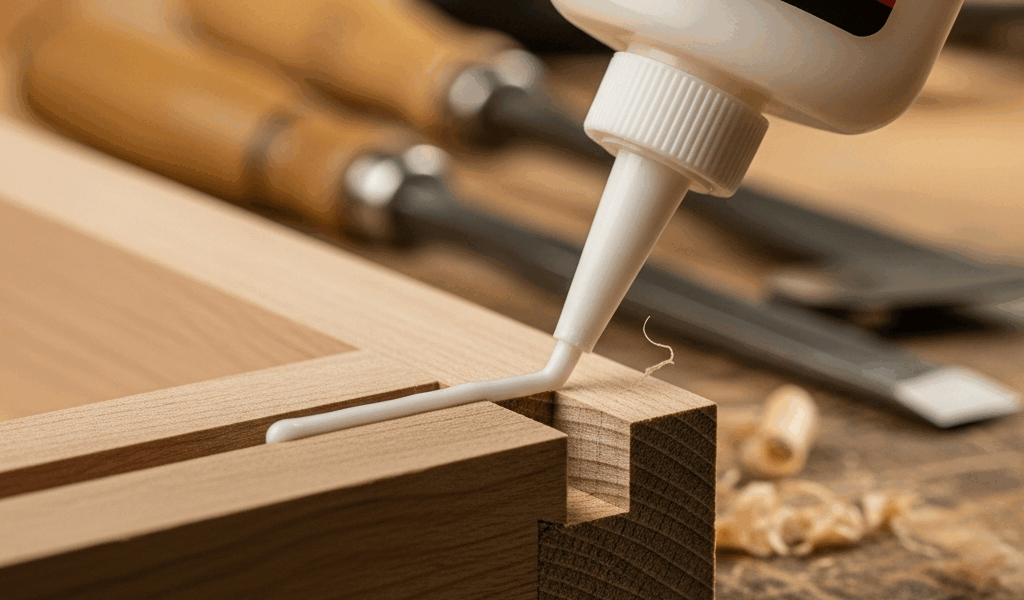
You glued a joint, clamped it overnight, and it failed the first time you loaded the piece. Now you want to know which wood glue is actually the strongest. Here is the answer that woodworking forums argue about endlessly, settled with actual test data.
The Short Answer: PVA Glue Is Stronger Than the Wood
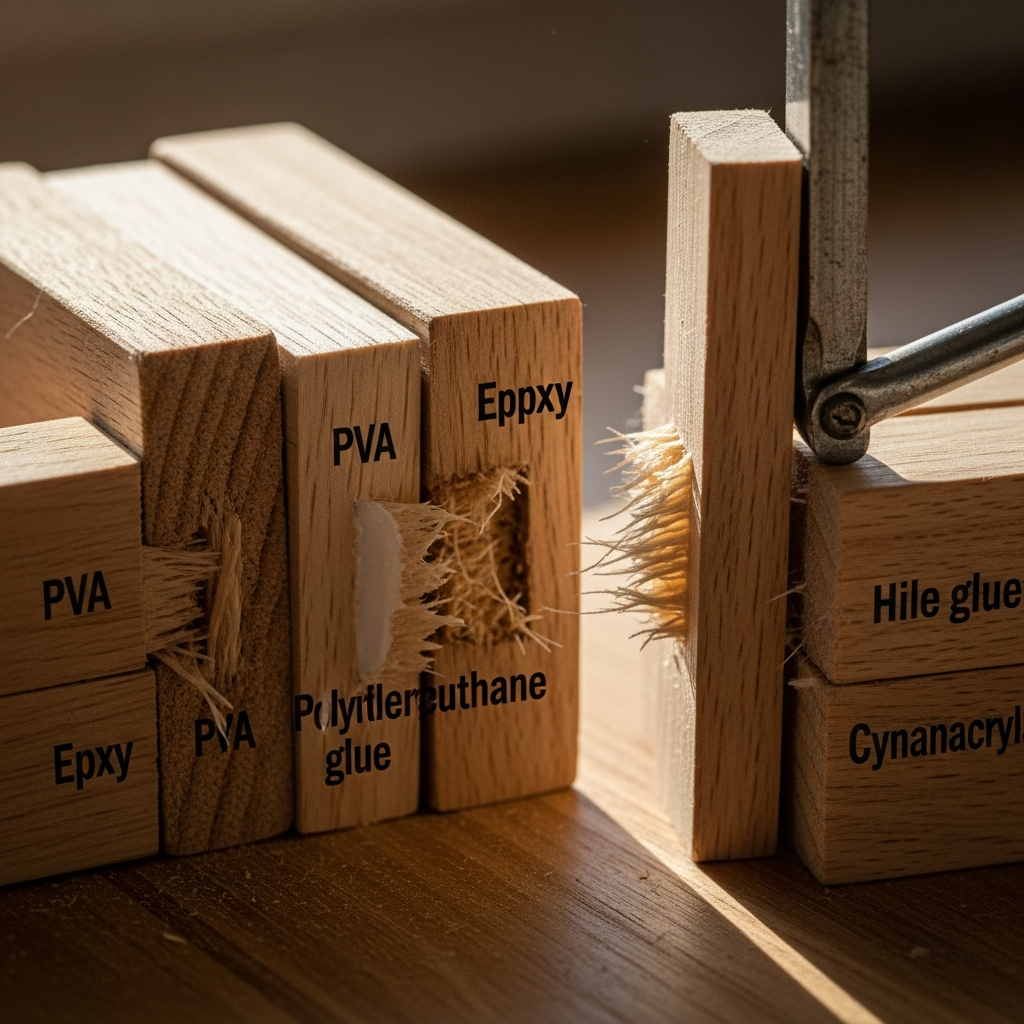
Titebond III (and similar Type III PVA wood glues) creates a bond that exceeds the shear strength of the wood itself in a properly fitted joint. When a PVA-glued joint fails under stress testing, the wood breaks — not the glue line. This is not marketing; it is the consistent result in shear testing across hardwoods and softwoods. The glue is stronger than the material it bonds.
For roughly 90% of woodworking applications — furniture, cabinets, boxes, shelving, joinery — PVA wood glue is the correct answer and the strongest practical option.
Why Epoxy and Polyurethane Are Not Always Better
Epoxy fills gaps, which means it works on joints that don’t fit tightly. But on a well-fitted joint — the kind you should be cutting — PVA outperforms epoxy in shear. Epoxy’s advantage is gap-filling, not raw bond strength on tight joints. Use it for repairs, for bonding dissimilar materials (wood to metal, wood to stone), or for joints with imperfect fit. Do not default to it for standard woodworking joinery.
Polyurethane glue (Gorilla Glue) foams as it cures, which looks impressive but creates a weaker bond than PVA on wood-to-wood joints. The foam does not add strength — it fills space. In shear testing, PVA consistently outperforms polyurethane on tight-fitting wood joints. Polyurethane’s advantage is bonding wet wood and cross-material applications. For dry wood joinery, it is the wrong tool.
When to Use Which Glue
PVA (Titebond II or III): Standard joinery, furniture assembly, edge gluing, face gluing. Titebond II for interior projects, Titebond III for outdoor or water-exposed applications. This is your default.
Epoxy: Gap-filling repairs, bonding wood to non-wood materials, structural repairs where joint fit is imperfect, boat building.
CA glue (super glue): Small crack repairs, turning blanks on the lathe, temporary fixtures. Not for structural joints.
Hide glue: Period furniture reproduction, instrument making, any application where you need reversible joints. Weaker than PVA in raw strength but serves specific use cases that PVA cannot.
The Verdict
Titebond III PVA is the strongest wood glue for standard woodworking joints. The joint will be stronger than the wood around it. If your joints are failing, the problem is almost certainly joint fit or clamping pressure — not the glue. A tight joint with PVA and proper clamping time will hold longer than the wood itself lasts.



Stay in the loop
Get the latest artisan furniture makers updates delivered to your inbox.