What’s Actually Happening When Wood Shrinks Unevenly
Wood shrinkage has gotten complicated with all the half-truths flying around. I spent three years making the same mistakes — building beautiful projects that twisted like a pretzel within six months — before I finally sat down and learned what was actually going on.
But what is uneven shrinkage? In essence, it’s wood contracting at different rates depending on direction. But it’s much more than that.
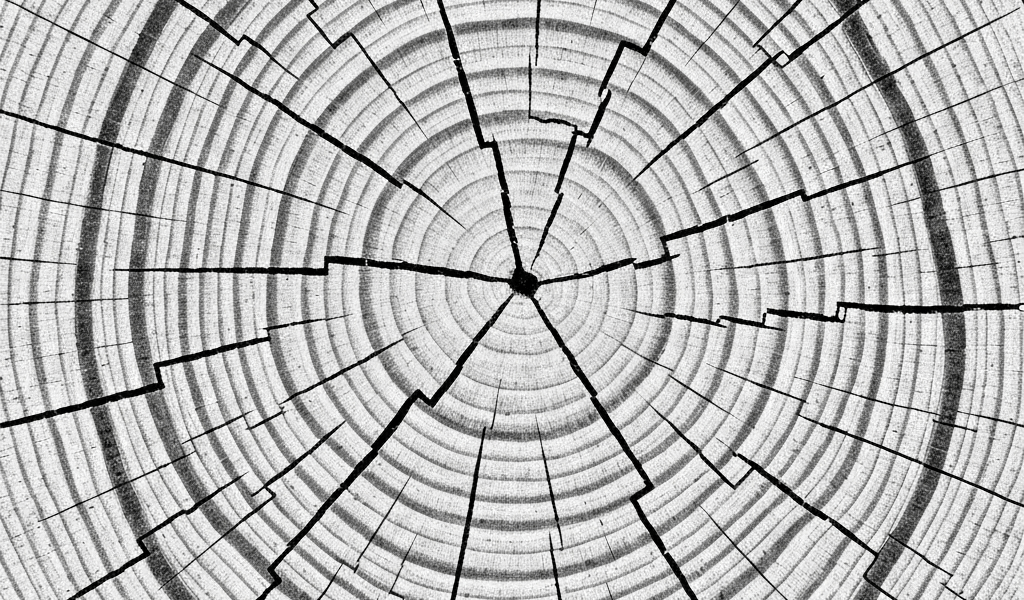
Here’s the actual problem: wood doesn’t shrink uniformly. It shrinks drastically along the growth rings (tangentially), moderately across the grain toward the center (radially), and almost not at all lengthwise along the grain. This directional difference is everything.
Imagine a rope twisted from plant fibers. When that rope dries, the fibers want to shrink, but they’re locked together in a spiral pattern. Tension becomes uneven — some areas tighten faster than others, and the whole thing warps. Wood behaves similarly. Growth rings are like those fibers. A board with rings running horizontally across its face will shrink more along those rings than it will across the grain. A board where rings run vertically? Completely different story.
Radial shrinkage typically measures 3–6%. Tangential shrinkage? 6–12%. That’s often twice as much. On a 10-inch-wide panel with rings running horizontally, you could lose nearly an inch of width while losing only half an inch in the other direction. The wood doesn’t shrink evenly. It twists, cups, or bows.
The reason this happens months after you finish your project — not immediately — is moisture equilibrium. The outer surfaces reach equilibrium with your shop humidity first. The interior stays wetter longer. When the interior finally dries, it wants to shrink, but it’s now locked by the already-dried exterior. Internal stress builds. The wood moves in whatever way relieves that stress fastest. Usually badly.
How to Identify Uneven Shrinkage Before It Ruins Your Build
Probably should have opened with this section, honestly. Learning to spot warning signs would have saved me from refinishing a walnut dining table six months after delivery.
The telltale signs appear in phases. Gaps open up between boards or along joints — not immediately after assembly, but weeks or months later. The gaps are rarely uniform. One side might open 1/8 inch while the other stays tight. That’s your growth-ring direction doing different things.
Twisted or cupped panels are the most obvious red flag. A panel that looked perfectly flat when you glued it up develops a slight bow or spiral. Run your hand across it and you’ll feel the high spots. On a tabletop, this becomes functionally unusable. Items roll. It catches the light wrong. Frustration sets in.
Joints that were hand-tight during assembly become loose enough to move by hand months later. Mortise-and-tenon joints develop play. Dovetails rattle slightly. This happens because the wood surrounding the joint shrank more in one direction than the other, leaving the joint undersized in one axis.
Why does timing matter for prevention? By the time you see these problems, you’re past the point where prevention would have helped. The wood is already dried. You’re now in damage-control mode. That’s what makes wood science endearing to us craftspeople — there’s a right way to think about it and a wrong way.
The real win is catching the risk during design and material selection, not after assembly. Look at your board orientation before glue touches it. Choose your wood species before you’re halfway through the project.
Prevention Tactics That Actually Work
Here’s the hierarchy of strategies, ranked by actual impact.
Strategy 1 — Quarter-Sawn Lumber Over Flat-Sawn
Quarter-sawn wood has growth rings running roughly perpendicular to the face. Both radial and tangential shrinkage happen in less problematic directions. A quarter-sawn board shrinks more evenly across its width. The catch: quarter-sawn costs 30–60% more than flat-sawn, and it’s harder to source. For a tabletop where stability matters, it’s worth the expense. For cabinet sides hidden inside? Maybe not.
Strategy 2 — Acclimate Wood to Your Shop
Before you cut a single board, let your lumber sit in your workshop for 2–4 weeks. Not in plastic. Not in sealed bags. Just stacked with spacers, ideally near where it’ll be used. This lets the wood reach moisture equilibrium with your shop’s humidity before you lock it into a project. I use 1-inch spacers and aim for rooms around 45–55% relative humidity. A $35 hygrometer tells you where you stand — at least if you want to actually measure instead of guessing.
This alone prevents maybe 40% of the problems I used to see.
Strategy 3 — Grain Orientation in Wide Panels
Book-matching — alternating the direction of growth rings panel to panel — helps tremendously. If panel A has rings arching up and panel B has rings arching down, their shrinkage movements partially counteract each other. The panel assembly stays flatter. You won’t eliminate the movement, but you’ll reduce cupping dramatically.
For a single wide panel, accept that it will move. Design your joinery to allow for it.
Strategy 4 — Joinery for Movement
Breadboard ends use a floating tenon that slides in a mortise. The center boards can shrink freely while staying captured. Sliding dovetails work the same way. The key is that at least one axis allows controlled movement — rigid glue joints across the grain are practically a guarantee of future problems.
Wood Species Shrinkage Reference
Not all wood behaves the same. Here’s what actually matters:
| Species | Radial % | Tangential % | Stability |
|---|---|---|---|
| Black Walnut | 5.5% | 7.8% | Medium |
| Red Oak | 4.2% | 8.9% | Medium-Low |
| Hard Maple | 4.8% | 7.6% | Medium |
| Cherry | 3.7% | 7.1% | Medium-High |
| Eastern White Pine | 3.2% | 6.5% | Medium-High |
| White Ash | 4.1% | 8.3% | Medium-Low |
Cherry sits at the stable end. Oak’s a nightmare — that 8.9% tangential shrinkage means wide panels twist like crazy. Walnut’s the middle ground, which explains why it’s so popular for furniture. Pine’s decent for dimensioned lumber but moves noticeably in wider boards.
These numbers matter when you’re designing. Build your walnut dining table 36 inches wide and you’ll likely get movement you can live with. Build it 48 inches wide from flat-sawn boards? You’re asking for trouble. That difference becomes obvious fast.
What to Do If You Spot Uneven Shrinkage After Assembly
Sometimes prevention fails. You assembled something, it sat for a few months, and now there are gaps or twists. Be realistic about what fixes actually work.
Disassembly and reassembly is the real solution, but it’s rarely practical on a finished piece. If the piece is structural or still in your shop, you have some options. If it’s already delivered to a client, your options shrink fast.
For minor cupping — less than 1/8 inch across 24 inches — careful sanding might flatten it enough to be unnoticeable. It won’t solve the underlying problem. The wood will try to return to its movement pattern. But it buys time. Sand with the grain. Use 80-grit, then 120, then your final grit. You’re not trying to sand the piece flat. You’re just reducing the visible high spots.
Gaps in joints get filled with matching wood dust mixed in epoxy or with purpose-made wood filler for your species. Minwax stain-matched fillers run $6–12 per can and come in two dozen species. It’s a band-aid, not a cure. That’s honest.
Loose joints sometimes benefit from shimming or re-gluing, but if the joint’s loose from movement, tightening it risks creating worse problems when the wood moves again during seasonal changes.
The real lesson sits right here: prevention wins every single time. Once movement happens, you’re managing damage, not solving the problem. The time to think about radial and tangential shrinkage is before you buy the wood, not after the piece warps.



Stay in the loop
Get the latest artisan furniture makers updates delivered to your inbox.