The Art of Hidden Storage
Secret compartment furniture has gotten complicated with all the YouTube hidden-door reveals and spy-movie builds flying around. As someone who’s designed and built concealed storage into armoires, desks, and cabinets for clients who actually need it, I learned everything there is to know about making hidden spaces that work in real life. Today, I will share it all with you.
Every woodworker eventually gets the request: build something with a secret compartment. The appeal is universal — a hidden space that reveals itself only to those who know where to look. An armoire with secret storage represents the pinnacle of this craft, combining fine furniture construction with the puzzle-box thinking that transforms ordinary cabinetry into something genuinely exciting to show off at dinner parties.
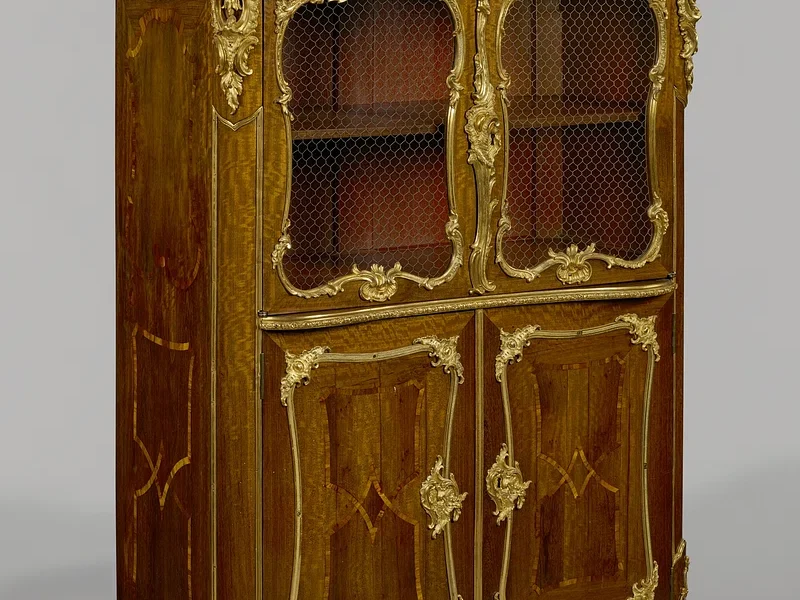
The armoire I’m walking you through stands 72 inches tall, 42 inches wide, and 24 inches deep. Behind its conventional wardrobe storage lies a concealed compartment accessible only through a hidden mechanism. And before you ask — this isn’t novelty furniture. It’s a legitimate solution for securing valuables, important documents, or items you’d rather not explain to curious houseguests. I’ve built these for gun owners, coin collectors, and one client who just didn’t trust banks with her grandmother’s jewelry.
Structural Considerations
That’s what makes hidden compartment builds endearing to us furniture makers — you’re basically building two pieces of furniture in one, and nobody gets to know about the second one. Secret compartments require extra material, which means extra weight. Plan for this from the very start.
The carcass should be built from 3/4-inch plywood with solid hardwood face frames and panels. I recommend a traditional frame-and-panel construction for the sides rather than simple plywood panels. The frames provide additional structural integrity, and the panels offer natural concealment opportunities that flat plywood just can’t match.
Build the base sturdy enough to support an armoire that will weigh significantly more than a standard wardrobe. I use 2×4 construction lumber for the base frame, hidden behind a decorative kick plate that matches the cabinet exterior. Don’t underestimate the weight — once you’ve got the false back, the extra structure, and all the mechanism hardware, you’re easily adding 40-50 pounds over a regular armoire.
Creating the Hidden Compartment
Probably should have led with this section, honestly. The most successful secret compartments exploit existing furniture geometry rather than fighting it. In an armoire, the obvious locations are a false back or false bottom. I prefer a false back because it provides more usable hidden space while remaining virtually undetectable during casual inspection. False bottoms work too, but people tend to notice when the interior seems shallower than it should be.
Build a secondary back panel positioned 6 inches in front of the actual armoire back. This creates a hidden cavity you can access through a concealed panel. The false back should appear identical to a standard cabinet back — same material, same nail pattern, same edge treatment. I even age the nails on the false back to match the real ones. Paranoid? Maybe. Effective? Absolutely.
The access panel itself is where craftsmanship matters most. One elegant solution I’ve used repeatedly is a magnetic touch latch hidden behind a decorative molding strip. Press the molding in a specific location and the panel releases, pivoting on concealed hinges to reveal the storage space behind. The first time you show someone how it works, the look on their face makes the whole build worthwhile.
Release Mechanism Options
Several mechanisms work well for hidden panel release. Magnetic touch latches are my go-to solution — they’re reliable, silent, and leave absolutely no visible hardware. Install the latch body inside the cabinet structure with the strike plate on the access panel. A firm press in the correct location overcomes the magnetic resistance and allows the panel to swing open.
More elaborate options include mechanical push-button releases disguised as decorative elements, or book-spine triggers if your armoire includes display shelving. I built one where you had to pull a specific book spine to release the back panel — the client was a mystery novel collector, so it felt appropriate. Whatever mechanism you choose, it should be intuitive once you know the secret, but absolutely invisible to anyone who doesn’t.
Primary Storage Construction
Don’t let the secret compartment overshadow the armoire’s primary function. This is still a piece of furniture that needs to work as a wardrobe first and a vault second. The main cabinet should include a hanging rod for clothing, positioned at standard height — 66 inches from floor to rod center. Below the rod, include a drawer unit or adjustable shelving for folded items.
The doors deserve special attention. Frame-and-panel construction with raised panels provides traditional elegance that nobody would look twice at. Install doors using European concealed hinges for clean sight lines, or surface-mounted decorative hinges if the design calls for visible hardware. I usually go concealed because the cleaner the exterior looks, the less anyone suspects there’s anything unusual going on inside.
Interior Finishing
Line the hidden compartment with aromatic cedar panels if it’s intended for document storage — the natural oils deter insects and add a pleasant scent that greets you every time you open the panel. For valuables like jewelry or coins, consider adding a layer of felt or velvet lining to prevent scratches. I use adhesive-backed jewelry liner from a craft supply shop.
Install battery-powered LED lights inside the secret space. Motion-activated strips work perfectly — the light kicks on when the panel opens, eliminating fumbling in the dark. It’s a small touch that makes the compartment feel intentional rather than improvised.
Security Versus Secrecy
Here’s something I tell every client: a hidden compartment provides secrecy, not security. These are fundamentally different things. A determined thief who tears apart your furniture will eventually find it. For serious valuables, combine hidden storage with a small safe installed inside the concealed space. This gives you both obscurity and genuine security — the hidden compartment keeps honest people honest, and the safe stops everyone else.
Final Assembly and Testing
Test your release mechanism hundreds of times before final assembly. I mean it — hundreds. It must work reliably every single time without adjustment, because being locked out of your own secret compartment is the most frustrating experience in furniture ownership. I know this from a client who called me at 11 PM because their touch latch had shifted. Don’t let that be you.
Document the mechanism’s operation and hide that documentation somewhere separate from the armoire itself. You don’t want to forget how to access your own hidden storage five years from now.
This project represents advanced woodworking, typically requiring 40-60 hours and $600-800 in quality hardwood. The result is furniture that sparks genuine wonder — a piece that holds secrets as well as it holds clothing, and makes everyone who sees the hidden compartment feel like they’re in on something special.