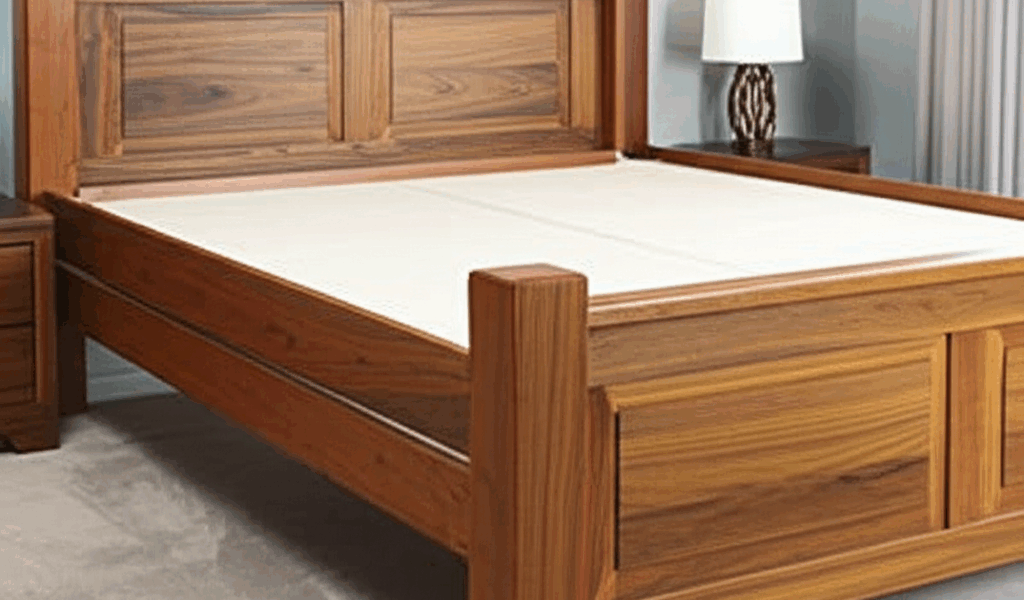
Building your own bed frame creates a foundation for restful sleep while showcasing your woodworking abilities. From platform designs to traditional frames with headboards and footboards, a custom bed becomes the centerpiece of your bedroom and potentially the most meaningful piece of furniture in your home.
Understanding Bed Dimensions
Standard Mattress Sizes
Design your frame around standard mattress dimensions:
- Twin: 38″ × 75″
- Full: 54″ × 75″
- Queen: 60″ × 80″
- King: 76″ × 80″
- California King: 72″ × 84″
Frame Sizing
Build interior frame dimensions 1/2 to 1 inch larger than the mattress for easy fitting while preventing excessive movement. Overall frame dimensions include headboard thickness and any decorative overhang.
Design Options
Platform Beds
Platform designs support the mattress directly on a solid or slatted surface, eliminating the need for a box spring. Lower profile creates modern aesthetics while often incorporating storage drawers underneath.
Traditional Frames
Traditional beds use side rails with ledger strips or metal brackets to support slats or a box spring. Headboards and footboards connect with bed bolts for knockdown capability.
Four-Poster and Canopy
Dramatic designs featuring tall posts at each corner. Posts may be turned, carved, or simple squares. Canopy versions connect posts at the top for fabric draping.
Construction Fundamentals
Headboard Building
Headboards range from simple panel designs to elaborate constructions:
- Panel headboard: Frame and panel construction, traditional appearance
- Slab headboard: Solid wood or edge-glued boards, modern style
- Upholstered: Padded and fabric-covered for comfort
- Bookcase: Integrated storage and display shelving
Side Rail Construction
Side rails must support significant weight without sagging. Use 6/4 or 8/4 hardwood for adequate strength. Attach to headboard and footboard with bed bolts—heavy-duty hardware designed for repeated assembly and disassembly.
Slat Systems
Support slats distribute mattress weight to the frame:
- Use 1×4 or 1×3 slats spaced 2-3 inches apart
- Center support beam prevents slat flex on queen and larger sizes
- Slats should rest on ledger strips or metal brackets, not rely solely on end support
Joinery Considerations
Bed Bolt Hardware
Bed bolts provide strong, removable connections between components. The bolt passes through the rail into a barrel nut embedded in the post. This system allows moving the bed through doorways while maintaining rock-solid joints when assembled.
Mortise and Tenon Alternatives
For beds that won’t be disassembled, traditional mortise and tenon joinery provides maximum strength. Size tenons generously—bed joints experience significant stress.
Finishing
Finish Selection
Bedroom furniture finishes should be durable but don’t face the abuse of dining or kitchen pieces. Consider:
- Oil finishes for natural appearance and easy touch-up
- Lacquer for professional, furniture-store quality
- Polyurethane for DIY-friendly durability
Assembly Considerations
Finish components before final assembly when possible. Leave bed bolt holes and other hardware areas unfinished for proper function.
Practical Tips
- Test mattress height with your nightstands before finalizing frame height
- Consider under-bed storage needs in platform designs
- Leave adequate floor clearance for robotic vacuums if applicable
- Round or ease all edges that might contact shins in the dark
A handcrafted bed frame supports years of rest while demonstrating your craftsmanship in the most personal room of your home.



Stay in the loop
Get the latest wildlife research and conservation news delivered to your inbox.