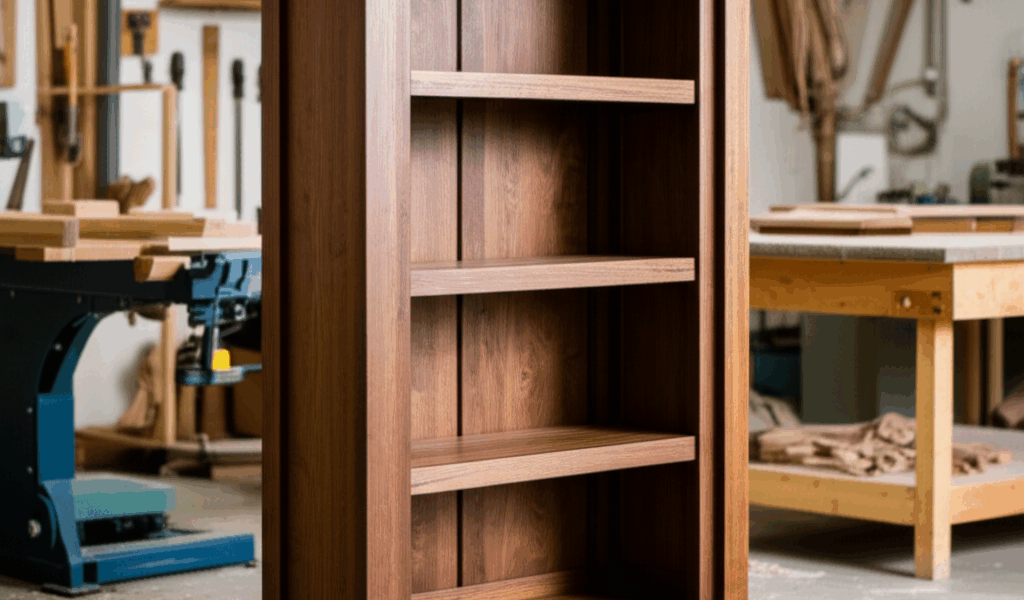
A well-built bookshelf does more than store books—it displays your personality, organizes your space, and showcases woodworking skill. From simple utility shelves to furniture-grade display pieces, bookshelf construction offers projects suitable for every skill level while teaching fundamental techniques.
Design Fundamentals
Standard Dimensions
Typical bookshelf dimensions accommodate standard book sizes:
- Shelf depth: 10-12 inches for most books
- Shelf spacing: 10-12 inches for paperbacks, 12-14 inches for hardcovers
- Overall width: Keep unsupported spans under 36 inches to prevent sagging
- Height: Match room proportions and accessibility needs
Style Considerations
Your bookshelf style should complement its surroundings:
- Traditional: Face frames, crown molding, furniture-style base
- Modern: Clean lines, floating appearance, minimal ornamentation
- Industrial: Metal hardware, pipe supports, raw materials
- Built-in: Integrated with room architecture
Material Selection
Solid Wood
Hardwoods like oak, maple, and cherry create heirloom-quality bookshelves. Softwoods like pine offer economy and easy workability, though they dent more readily. Always account for wood movement in your design.
Sheet Goods
Plywood and MDF provide stability and economy for utility shelving:
- 3/4-inch plywood: Strong, stable, finishes well with edge banding
- MDF: Economical, excellent for painted finishes, heavy
- Melamine: Pre-finished, easy to clean, limited aesthetics
Construction Methods
Fixed Shelf Construction
Fixed shelves provide maximum strength using dado joints:
- Cut dados 1/4 to 1/3 the thickness of side panels
- Size shelves for snug fit in dados
- Glue and clamp, or reinforce with screws from outside (filled or covered)
Adjustable Shelving
Shelf pins allow flexibility for changing collections:
- Use a drilling jig for consistent hole spacing (typically 32mm/1.25 inches)
- Drill holes 3/8 inch diameter, 1/2 inch deep
- Choose quality shelf pins rated for expected weight
Preventing Sag
Books are heavy—prevent shelf sag with these techniques:
- Limit unsupported spans to 32-36 inches maximum
- Use 3/4-inch minimum shelf thickness
- Add a 1×2 solid wood front edge for rigidity
- Consider center support dividers for wide units
Joinery Options
Dadoes and Rabbets
The workhorses of casework joinery—strong, alignment-friendly, and hidden when assembled. Cut with a table saw, router, or dado stack.
Biscuits and Dowels
Provide alignment and added strength for butt joints. Especially useful for plywood construction where dadoes may telegraph through veneer.
Pocket Screws
Quick and strong for utility shelving. Hidden when placed strategically, though purists prefer traditional joinery.
Back Panel Options
- 1/4-inch plywood: Adds rigidity, clean appearance
- Beadboard: Decorative option for traditional styles
- Open back: Light and airy, requires diagonal bracing for stability
Finishing Touches
Sand through grits to 180 for clear finishes, 150 for paint. Apply finish before final assembly when possible—it’s much easier to finish individual pieces. Consider the bookshelf’s location when choosing finish durability.
A thoughtfully designed and carefully built bookshelf rewards you with decades of service while displaying your craftsmanship alongside your favorite volumes.



Stay in the loop
Get the latest wildlife research and conservation news delivered to your inbox.