
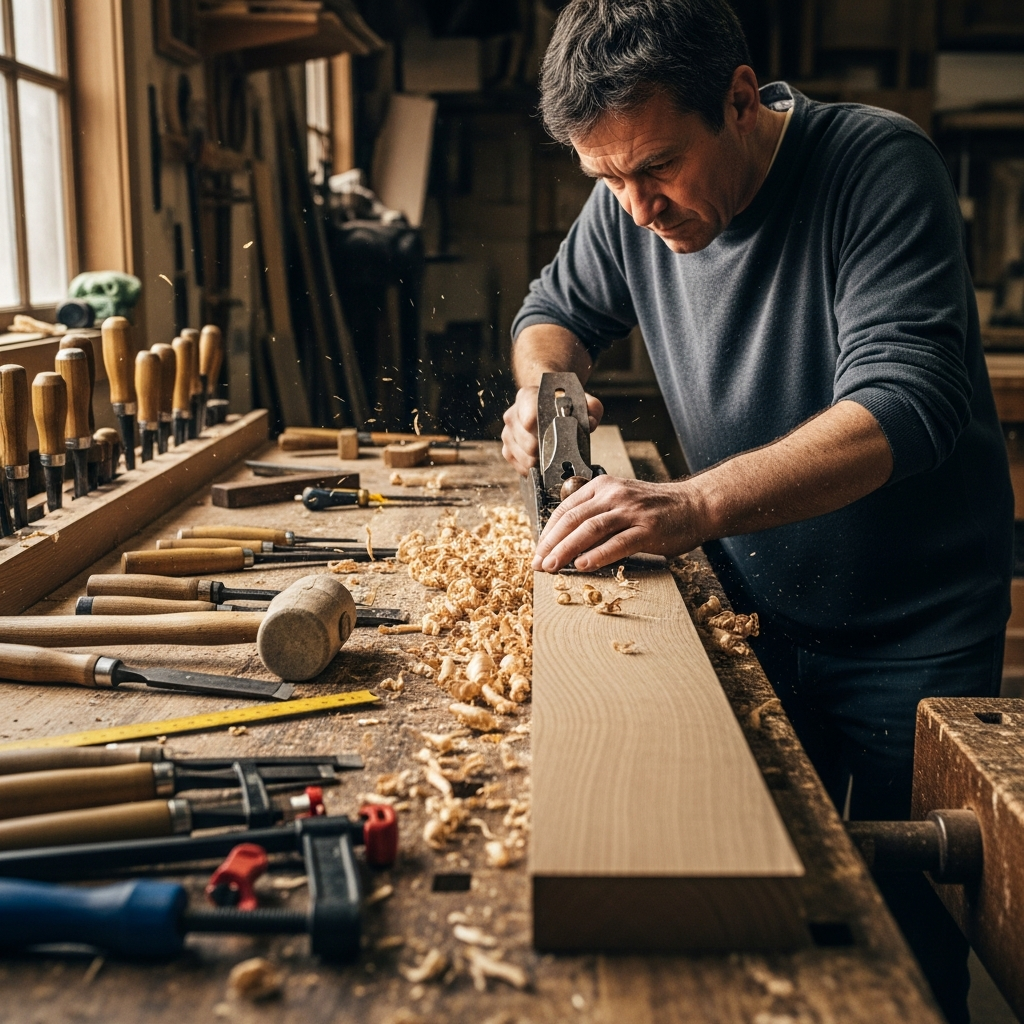
My workshop was a disaster for the first three years. Seriously – I spent more time looking for tools than actually using them. Sandpaper mixed with screws. Chisels buried under offcuts. It was embarrassing, and it was costing me money.
Then I spent a weekend getting organized, and everything changed. Not just my productivity (though that definitely improved), but my whole relationship with the space. A clean shop is a safer shop, and honestly, its just more enjoyable to work in.
What Finally Worked For Me
Ive tried probably a dozen different organization systems over the years. Some were way overcomplicated. Some fell apart after a month. Heres what actually stuck.
Wall-Mounted Tool Storage
Getting tools off the bench and onto the wall was the single biggest improvement. I use a mix of french cleats and simple plywood hangers. The french cleat system is fantastic because I can rearrange things without drilling new holes.
My most-used hand tools hang right above my main workbench. Chisels in a simple rack (just a strip of wood with holes drilled in it), planes on a shelf, marking tools in a small cubby. When I need a chisel, I grab it. When Im done, it goes right back. No thinking required.
Less-used tools live on the opposite wall. Specialty clamps, layout tools I only use for certain projects, that kind of thing. Still accessible, but not taking up prime real estate.
Hardware Organization That Doesnt Drive You Crazy
Screws, nails, hinges, pulls, brackets – the small stuff will bury you if you let it. I went through probably four different systems before landing on what works.
Those little parts bins with the pull-out drawers? Theyre okay for small quantities. But if you buy hardware in bulk (and you should, for cost savings), you need bigger containers. I use clear plastic bins with snap lids, labeled with masking tape. Theyre cheap, stackable, and I can see whats inside without opening them.
The key is having a dedicated spot for each category. Screws by size in one section. Hinges and hardware in another. Sandpaper by grit. Finishes grouped together. Once everything has a home, putting things away becomes automatic.
Lumber Storage That Actually Works
Lumber was my biggest storage challenge. For years, I had boards leaning against every wall, stacked in corners, basically anywhere they fit. Finding what I needed meant moving twenty boards to get to one.
Now I have a simple rack system. Vertical storage for longer boards, horizontal storage for shorts and cutoffs. Everything is organized by species and rough thickness. Takes me about five seconds to find what Im looking for.
The game-changer was building a separate rack for offcuts. Before, I hoarded everything because who knows, right? Now I have one bin for each common thickness. When its full, I either use those offcuts or they become firewood. Keeps the clutter manageable.
Finishing and Chemical Storage
This one matters for safety as much as organization. Finishes, solvents, and adhesives need to be stored properly. I learned this the hard way when a can of lacquer thinner fell off a shelf and the fumes gave me a headache for a week.
I built a dedicated cabinet for finishing supplies. Its not fancy – just a plywood box with a door. But it keeps everything contained and away from heat sources. Flammable stuff gets its own section with a clearly marked label. Glues are separate from finishes. And everything is organized by type so I can find what I need quickly.
One thing that helps a lot: I keep a small inventory list taped inside the door. When something runs low, I write it down immediately. No more realizing Im out of polyurethane in the middle of a project.
The Clean-Up System
Organization only works if you maintain it. For me, that means building cleanup time into every work session. Last 10-15 minutes of the day, tools go back, scraps go in the bin, surfaces get swept. Non-negotiable.
I also do a deeper clean once a week. Vacuum the floor, wipe down surfaces, check that everything is actually in its place. Takes maybe half an hour and keeps the shop from sliding back into chaos.
The secret is making cleanup easy. Trash cans positioned where I actually generate waste. A broom hanging right by the door. Dust collection hooked up to every major tool. When putting things away is harder than leaving them out, you wont do it consistently.
Mistakes I Made Along the Way
Some lessons from my various failed organization attempts:
- Overcomplicating the system. My first tool storage project had individual slots for every tool, precisely sized and labeled. Looked great on Instagram. In practice, if a tool didnt fit exactly right, I just left it on the bench. Simpler is better.
- Buying containers before knowing what I was storing. I have a stack of unused bins in the corner because I bought them before I figured out what I actually needed. Organize first, then buy containers that fit.
- Storing things by category instead of by use. It seems logical to put all clamps together, but I use some clamps constantly and others almost never. The everyday clamps should be front and center. The specialty stuff can live in the back.
- Ignoring vertical space. I had an entire wall unused above my bench for years. Now its covered in tools and supplies. The floor is for machines and assembly. Everything else should be up and out of the way.
What Good Organization Buys You
After all this effort, is it worth it? Absolutely. Heres what changed:
- I spend less time looking for things. This alone probably saves me an hour a day.
- I buy less duplicate stuff. Used to buy more sandpaper because I couldnt find what I already had. Now I know exactly whats in stock.
- My work is safer. Tools in their places, clear pathways, no tripping hazards. Fewer close calls.
- I actually enjoy being in the shop more. A clean, organized space just feels better to work in.
If your shop is currently a disaster, pick one area and fix it this weekend. Just one wall, or one category of stuff. Then do another the next weekend. In a month or two, youll have a completely different space.
Your future self will thank you. Trust me on this one.




Stay in the loop
Get the latest wildlife research and conservation news delivered to your inbox.