I spent two weeks in the Swiss Alps a few years back – partly vacation, partly research for a dining set I was building for a client who wanted that mountain lodge aesthetic. What I found in those old chalets changed how I think about furniture design.
The furniture there wasnt fancy. It wasnt trying to be. But after a hundred years, it was still solid, still beautiful, still perfectly functional. Thats the kind of durability we should all be aiming for.
What Makes Alpine Furniture Different
When I got back from that trip, I started reading everything I could find about traditional Alpine woodworking. The more I learned, the more I realized these mountain craftsmen had figured out some things that modern furniture makers have forgotten.
Wood Selection Is Everything
In the Alps, trees grow slowly because of the altitude and cold. That means tighter grain, denser wood, and natural strength you cant replicate by just buying the cheapest lumber at the big box store.
They used what they had – mostly spruce, pine, and larch. But they chose carefully. Wood cut from the north side of the tree (less sun exposure) was considered more stable. Trees harvested in winter when the sap was down lasted longer. I dont know if all of that holds up to modern science, but those old pieces are still around, so something was working.
These days, I apply the same principles differently. I source my lumber from small mills when I can. I look for tight grain and let everything acclimate in my shop for months before I use it. Takes longer, but the results are worth it.
Simple Joinery That Actually Lasts
Alpine furniture doesnt rely on fancy joinery. Most of what I saw used mortise and tenon joints, maybe some dovetails for drawers. Nothing complicated – just solid execution.
The secret was in the proportions. Those tenons were beefy, not the skinny little things you sometimes see in mass-produced furniture. When a chair has been sat on daily for eight decades and still doesnt wobble, the joinery was clearly sized right.
I started making my tenons thicker after that trip. My furniture got noticeably more robust. Funny how simple lessons can have such a big impact.
Bringing Alpine Style Into Modern Spaces
Pure Alpine style – heavy carved pieces with heart cutouts and painted floral designs – doesnt really work in most contemporary homes. But the underlying principles translate beautifully.
Honest Materials
Alpine furniture never pretended to be something it wasnt. Pine looked like pine. Grain showed. Knots were a feature, not a flaw. That authenticity resonates with people today, especially as everyone gets tired of furniture thats all veneer and particleboard underneath.
When I build in the Alpine-inspired style, I leave more of the natural character visible. Not every surface needs to be perfectly smooth. A little texture, a visible tool mark here and there – it adds warmth.
Built to Last, Not to Impress
Those mountain craftsmen werent trying to show off. They were building furniture for their families, for daily use, for the long haul. No unnecessary ornamentation. Every piece had a purpose.
I try to carry that mindset into my own work. When Im designing a piece, I ask myself: will this matter in 50 years? If a detail is purely decorative and adds nothing to function or durability, maybe it doesnt need to be there.
A Client Project That Pulled It All Together
Last year I built a dining set for a family with a mountain cabin in Colorado. They wanted something that felt like it belonged there – rustic but not kitschy, substantial but not clunky.
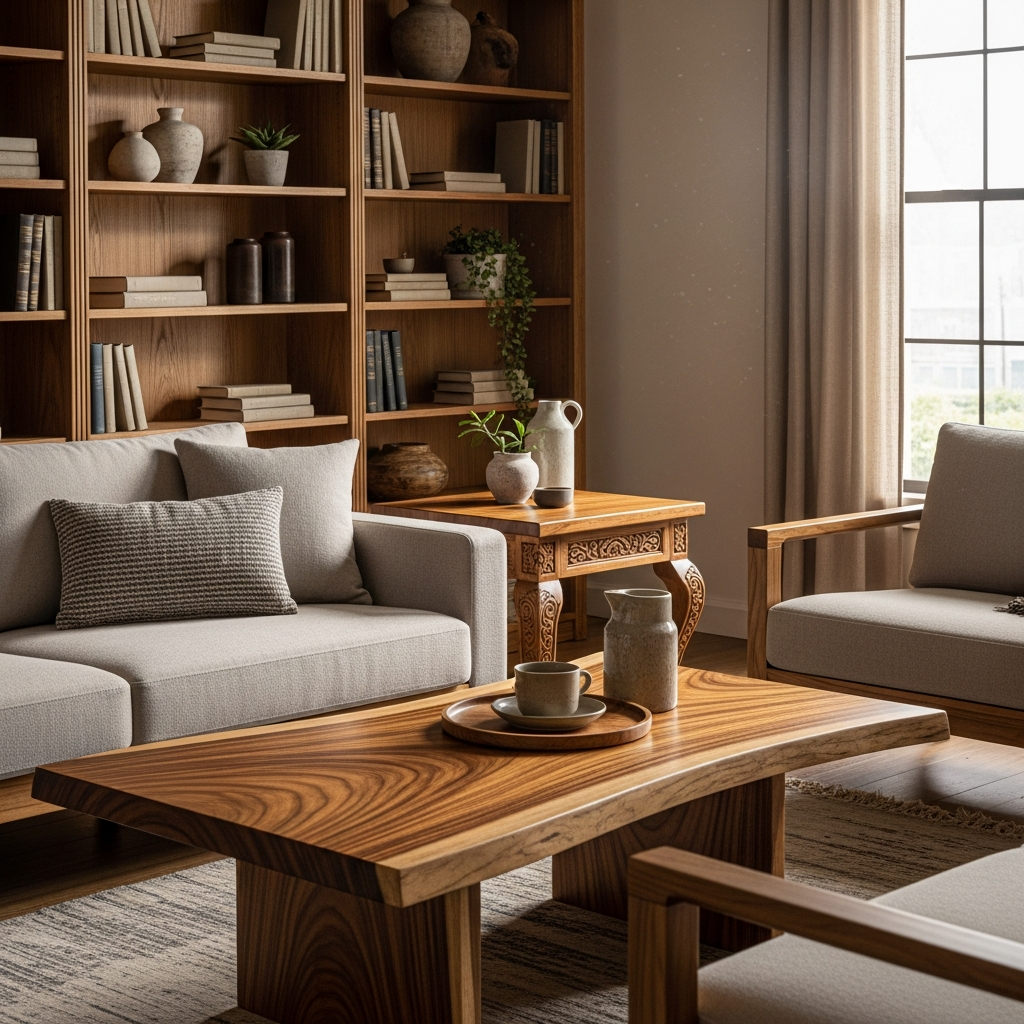
I used white oak for the table and chairs. Wide boards with visible grain, finished with a hand-rubbed oil that youll need to refresh every couple of years (which I actually like – it keeps the owners connected to the furniture). The table legs were chunky, tapered only slightly, with through-tenons that showed on the top. No fancy curves, just solid proportions.
For the chairs, I went with a traditional plank seat instead of upholstery. More comfortable than you might expect once you shape the seat properly. And those seats will outlast any fabric by decades.
The whole set took me about six weeks. When I delivered it, the client said it looked like it had always been there. Thats the goal.
Practical Tips for the Home Woodworker
If you want to incorporate some Alpine principles into your own work, here are a few things Ive learned:
- Dont be afraid of thick stock. Modern furniture often looks spindly because were trained to minimize material. Thicker rails, thicker legs, thicker tops – they just feel better.
- Let imperfections stay. A small knot, a bit of color variation, a slightly wavy edge – these add character. You dont need to sand everything to perfection.
- Use fewer species. Alpine furniture was often made from a single type of wood. Theres a visual coherence that comes from limiting your palette.
- Finish simply. Oil finishes that can be renewed over time beat synthetic finishes that look great initially but degrade badly. Your grandchildren should be able to maintain what you build.
The Bigger Lesson
What I really took away from studying Alpine furniture wasnt about aesthetics. It was about mindset. Those craftsmen built things to last because they expected their work to be used for generations. Furniture wasnt disposable. It was an investment of time and skill that would pay dividends for decades.
We can build that way too. It takes a little more time, a little more thought, and probably slightly more expensive materials. But the result is furniture that means something – to the maker and to the people who use it.
I still think about that trip whenever Im roughing out a new project. What would those old mountain craftsmen think of this? Would it still be solid in a hundred years? If the answer is yes, Im probably on the right track.




Stay in the loop
Get the latest wildlife research and conservation news delivered to your inbox.