The first time I walked into a Fairfield Furniture showroom was pure accident. I was killing time in High Point, North Carolina during a furniture market, waiting for a meeting that got pushed back. Wandered into their space expecting the usual corporate furniture stuff and instead found myself genuinely impressed.
That was eight years ago. Since then, Ive worked on pieces that draw heavy inspiration from their design approach, and Ive come to appreciate what they do – and where small-shop makers like me can do it differently.
What Fairfield Actually Gets Right
Look, Im not being paid to say nice things about them. But credit where its due – theyve found a balance that a lot of furniture companies miss.
Comfort Without Compromise
Their upholstered pieces are actually comfortable. I know that sounds like a low bar, but have you sat in most designer furniture lately? Looks great, feels like sitting on a plywood box wrapped in expensive fabric. Fairfields sofas and chairs are genuinely comfortable for hours.
Ive torn apart a few damaged Fairfield pieces over the years (customer repairs, not vandalism) and the internal construction is solid. Real eight-way hand-tied springs on the higher-end stuff, good quality foam, thoughtfully designed frames. Theyre not cutting corners where it matters.
Classic Proportions That Age Well
Fashion in furniture changes faster than youd expect. That ultra-contemporary stuff from 2015 already looks dated. Fairfields approach leans toward traditional proportions with clean lines – not trendy, not boring, just well-balanced. A dining chair they made twenty years ago still works in a modern home. Thats harder to achieve than it sounds.
Where Their Approach Differs From Mine
This isnt criticism, just observation. When youre a furniture company of any real size, you make certain compromises that small shops dont have to.
The Wood Thing
Fairfield uses good wood, but theyre sourcing at scale. That means consistency – which is generally good for production furniture. But Ive built pieces from single trees. Literally – a client had a walnut tree come down on their property, and I made their dining table and six chairs from that one tree. The grain matches, the color flows from piece to piece, and theres a story there that factory production cant replicate.
Neither approach is right. Theyre just different. If you want a Fairfield dining set next month, they can do that. If you want a dining set from your grandmothers cherry tree, you need someone like me.
The Customization Gap
Fairfield offers customization, but within their framework. You can pick fabrics, sometimes adjust dimensions slightly, choose from their finish options. Thats more flexibility than most manufacturers offer.
But true customization – weird sizes for unusual spaces, specific design modifications, incorporating materials with personal meaning – thats small shop territory. I once built a coffee table that incorporated salvaged wood from a clients childhood treehouse. No production furniture company is doing that.
Lessons Ive Learned From Studying Their Work
Even if youre never going to buy Fairfield furniture, theres stuff worth learning from how they operate.
Consistency Is Underrated
When you buy a Fairfield piece, you know what youre getting. The quality is reliably good. The finishes are reliably attractive. This matters more than we sometimes admit in the every piece is unique artisan world.
Ive started being more systematic about my own work – documenting my finish formulas, templating common joinery, keeping notes on what works. It makes me more efficient and, honestly, makes my results more consistent. My clients appreciate knowing that the chairs in their dining set will all feel the same.
Upholstery Is a Separate Skill
Fairfields upholstery work is really good. And it reminded me that upholstery is basically a different trade from woodworking. For years I tried to do everything myself – build the frames, apply the springs, sew the cushions, the whole bit. The results were… okay.
Now I work with a local upholsterer on pieces that need it. I build the frames to her specifications, she handles the soft parts. The results are dramatically better than when I was fumbling through YouTube tutorials on spring tying.
The Price Question
Fairfield isnt cheap, but theyre not outrageous either. A well-made sofa from them might run $3000-5000 depending on options. For what you get, thats reasonable – especially compared to the garbage being sold at similar prices at some furniture chains.
Custom furniture from an independent maker (like me) typically costs more for comparable items. My version of that same sofa would probably be $6000-8000, honestly. But youre getting something truly one-of-a-kind, locally made, with complete control over every detail.
Is it worth the premium? Depends on what you value. Both are legitimate choices.
Mixing High-End Production and Custom Pieces
Something Ive noticed with clients who have good taste and realistic budgets: they often mix sources. Maybe the sofa and chairs are Fairfield or similar quality production. But the dining table is custom. The bookcase is custom. The pieces you interact with most intimately, or that need to fit unusual spaces, or that carry personal meaning – those are where custom really shines.
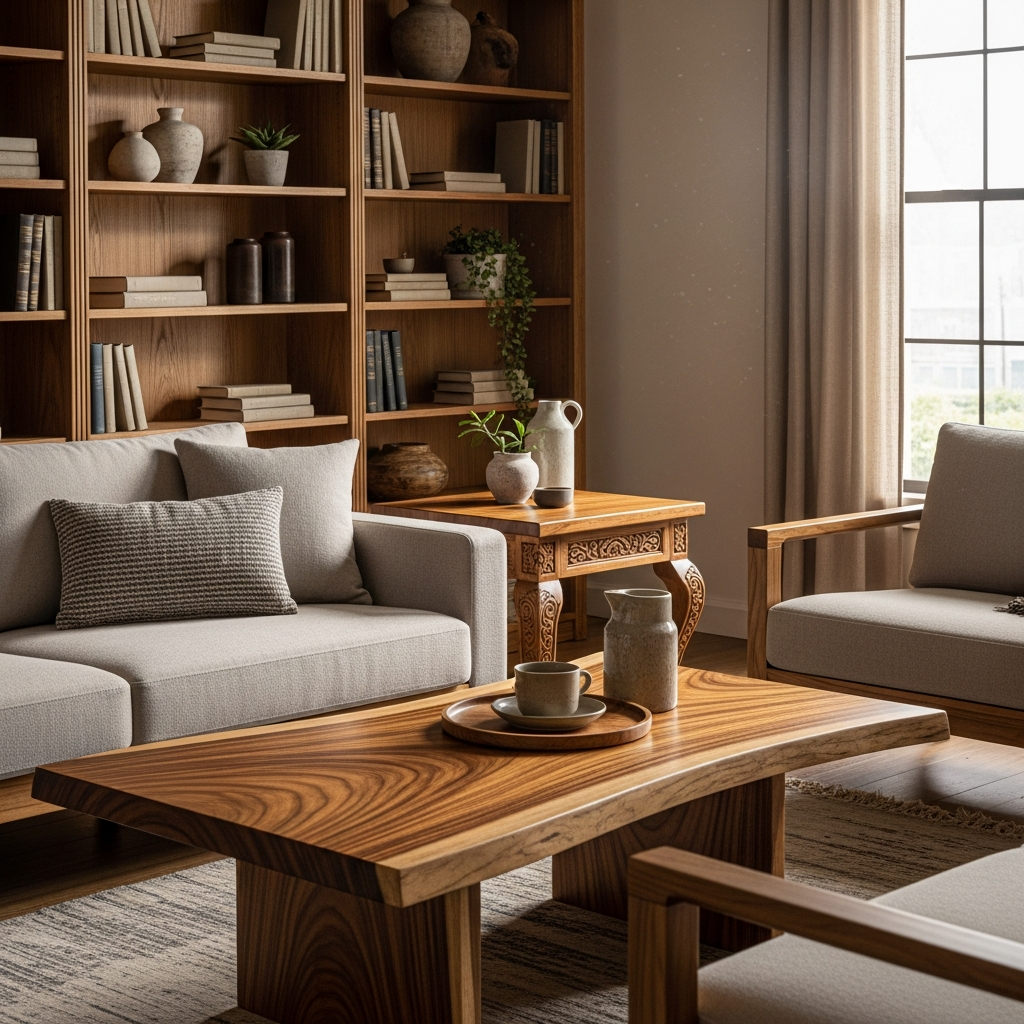
Ive furnished my own living room with this approach. The couch is a vintage Thayer Coggin that I found at an estate sale – beautiful upholstery work, solid frame, and honestly nicer than anything I could have built myself. But the coffee table, the side tables, the media cabinet? Those I made, sized exactly for the space, in wood that I chose specifically.
What To Look For If Youre Shopping
Whether youre looking at Fairfield or any other furniture company, heres what I check:
- Frame construction – Ask what the frames are made of. Solid hardwood is good. Plywood with hardwood in stress points is acceptable. Particleboard is a no.
- Spring system – Eight-way hand-tied is the gold standard for upholstered pieces. Sinuous springs are fine for cushion-back styles but not as durable for tight-back designs.
- Joinery – Dowels and corner blocks are the minimum. Mortise and tenon is better. Staples and butt joints are garbage.
- Finish quality – Run your hand over it. Does it feel thick and durable, or thin and sprayed-on? Check the undersides and hidden areas – thats where quality shows.
The Bigger Picture
Fairfields been around for decades. Theyve survived because they make good furniture at reasonable prices. Thats honestly not easy in an industry thats been hammered by overseas imports and race-to-the-bottom pricing.
As someone who makes a living building furniture by hand, I dont see companies like Fairfield as competition. They serve a different need. Sometimes my clients come to me after buying Fairfield pieces because they love the quality but want something specific that production cant provide. Sometimes I refer clients to production furniture when custom doesnt make sense for their needs or budget.
Good furniture is good furniture, wherever it comes from. My job is making the best furniture I can. Their job is making the best furniture they can at scale. Both have value.