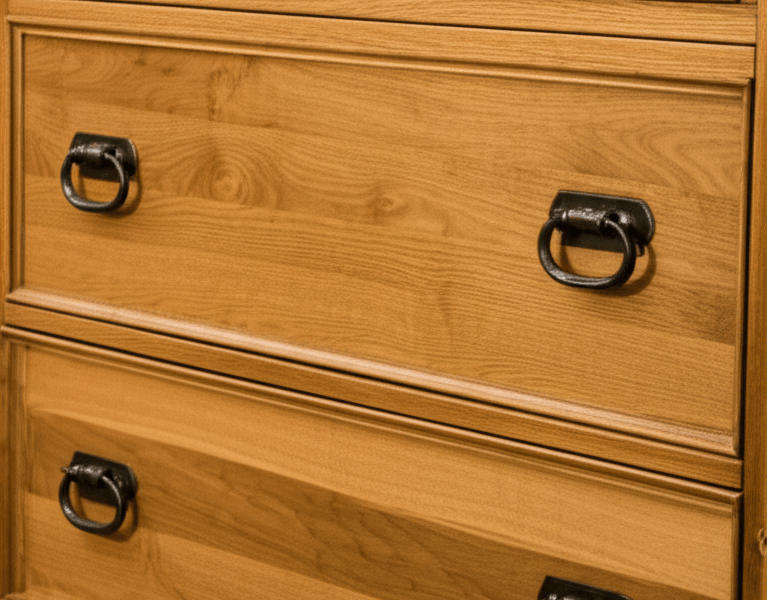
Building a dresser challenges your woodworking skills while creating essential bedroom storage. Multiple drawers, careful case construction, and attention to detail combine to produce furniture that serves daily while demonstrating craftsmanship. This guide covers the fundamentals of dresser construction from planning through finishing.
Dresser Planning
Standard Dimensions
Traditional dressers follow time-tested proportions:
- Height: 32-36 inches for standard dressers, 52-60 inches for tall chests
- Width: 36-72 inches depending on drawer configuration
- Depth: 18-22 inches to accommodate folded clothing
Drawer Configuration
Consider your storage needs when planning drawer layout:
- Smaller top drawers for undergarments and accessories
- Deeper bottom drawers for bulky items like sweaters
- Full-width or split drawer configurations
- Graduated sizing (smaller at top, larger at bottom) for visual balance
Case Construction
Frame and Panel Construction
Traditional dressers use frame and panel sides to allow wood movement while maintaining structure. Panels float in grooves within the frame, expanding and contracting seasonally without cracking.
Plywood Case Construction
Sheet goods offer stability and economy. Use 3/4-inch cabinet-grade plywood for sides, top, and bottom. Apply solid wood edge banding to hide plywood edges and create a furniture-quality appearance.
Dust Panels
Quality dressers include horizontal dust panels between drawer openings. These frames with thin panel centers keep contents clean and add substantial structural rigidity to the case.
Drawer Building
Drawer Box Construction
Quality drawers feature:
- Half-blind dovetails: Front joints hidden when closed, strongest connection
- Through dovetails: Rear corners, attractive exposed joinery
- Solid wood sides: Typically 1/2-inch secondary hardwood
- Plywood bottoms: 1/4-inch panel in grooves, unglued to allow expansion
Drawer Fronts
Apply finished fronts (called “false fronts”) over drawer boxes for perfect alignment and premium appearance. This two-piece construction allows adjustment after installation.
Drawer Slides
- Wood runners: Traditional, requires periodic waxing, authentic appearance
- Side-mount slides: Modern, full-extension available, easier installation
- Undermount slides: Hidden, soft-close options, premium choice
Face Frame vs. Frameless
Face Frame Construction
Traditional American furniture uses hardwood frames attached to case fronts. Face frames add strength, provide hardware mounting surfaces, and define the piece’s style through molding profiles.
Frameless (European) Construction
Frameless designs maximize interior space with overlay doors and drawers covering case edges. Cleaner contemporary aesthetic but requires precise construction tolerances.
Top Construction
Solid Wood Tops
Solid tops require attachment methods allowing cross-grain movement. Use figure-eight fasteners or wooden buttons—never glue solid tops to plywood cases.
Adding Interest
- Breadboard ends for traditional appearance
- Shaped edges with router profiles
- Overhang proportions (typically 1/2 to 1 inch on sides and front)
Hardware Selection
Drawer pulls significantly impact appearance:
- Knobs: Simple, classic, works with any style
- Bail pulls: Traditional, requires two mounting holes
- Cup pulls: Contemporary, comfortable grip
- Integrated pulls: Routed into drawer fronts, ultra-modern
Finishing
Finish all components before assembly when practical. Interior surfaces need only sealer coats. Exterior surfaces merit multiple finish coats sanded between applications. Allow adequate cure time before loading drawers—finish softness causes sticking.
A handcrafted dresser represents significant investment in time and materials, rewarded by decades of daily appreciation for quality that mass production cannot match.




Stay in the loop
Get the latest wildlife research and conservation news delivered to your inbox.