Mid Century Modern Shelving: What Works And What Is Just Hype
Mid century modern shelving has gotten complicated with all the marketing noise flying around. As someone who’s been collecting and building furniture for over a decade, I learned everything there is to know about what separates real mid century design from the overpriced knockoffs. Today, I will share it all with you.
I fell for a mid century modern shelf unit on Wayfair about two years ago. Looked perfect in the photos — teak finish, tapered legs, asymmetrical design. Very Don Draper office vibes.
What arrived was pressed particle board with wood-grain stickers and legs that wobbled from day one. Returned it immediately. Lesson learned: actual mid century pieces and stuff that’s merely styled after them are very different things. That experience sent me down a rabbit hole I haven’t come out of yet.
What Actually Makes It Mid Century
The real design movement ran from roughly the 1940s through the 60s. Post-war manufacturing techniques allowed for new forms — materials like molded plywood became possible. Designers could experiment in ways they simply couldn’t before.
But here’s what matters for shelving specifically: the good stuff from this era was built to last because materials were expensive and throwing things away wasn’t normal yet. That’s the opposite of most modern furniture where disposability is basically built into the design from the start.
Real mid century shelving uses solid wood or quality plywood. Teak and walnut were common because they were readily available and looked beautiful. The metal parts — brackets, legs, supports — were often solid steel or aluminum, not the hollow tubing you see in reproductions today.
Designers Who Actually Matter
Probably should have led with this section, honestly. Everyone name-drops Charles and Ray Eames, and sure, their stuff is iconic. The Eames Storage Unit is genuinely clever — modular before modular was cool, mixes materials in interesting ways. But good luck affording an original. Even reproductions cost serious money.
George Nelson is another big name. His platform bench that doubles as storage is smart design. The slatted wood construction works whether you’re sitting on it or storing books on it.
The one I actually bought stuff from is Poul Cadovius, a Danish designer most people haven’t heard of. His Royal System is wall-mounted shelving with adjustable components. Found a small section at an estate sale for $200. It’s been in my living room for five years now and still looks perfect. The teak has developed this beautiful patina that you just can’t fake.
Why I Think It’s Popular Again
Besides the obvious (it looks good in Instagram photos), mid century shelving actually works well in modern apartments. That’s what makes mid century design endearing to us furniture enthusiasts — it was practical first and pretty second.
Open floor plans mean you need furniture that functions as room dividers sometimes. A tall bookshelf can separate living and dining areas without blocking light. The best mid century designs anticipated this kind of flexibility decades before we needed it.
Small spaces benefit too. These designers were working in an era when houses were smaller. Their stuff was meant to maximize storage without overwhelming a room. That’s incredibly relevant again now that housing costs are insane and square footage is at a premium.
How To Spot The Good Stuff
If you’re shopping for mid century shelving, vintage or reproduction, here’s what I look for after years of getting burned and occasionally getting lucky:
Construction: Is it solid wood or plywood with a veneer? Both can be fine, but particle board is not. Check the edges — real wood has visible grain. Veneer will show the substrate at corners if you look closely.
Hardware: Older pieces have chunkier, heavier hardware. Thin stamped metal brackets scream modern production. Pick up a bracket — if it feels like nothing, that tells you something.
Proportions: Original designs were drawn by people who understood balance. Cheap knockoffs often get proportions slightly wrong — legs too skinny, shelves too thick, spacing uneven. It’s subtle but you feel it when something’s off.
Finish: Real teak oil finishes develop depth over decades. Fresh fake teak stain on pine looks flat and uniform. If everything looks too perfect and too even, be suspicious.
Reproductions Worth Considering
Not everyone can afford vintage. I get it — I couldn’t for years either. Some reproductions are decent if you manage expectations.
West Elm and CB2 have mid century styled pieces that look okay and use real wood. Not heirloom quality but not garbage either. Watch for sales because their full prices are hard to justify for what you’re getting.
Target’s Project 62 line is cheap but honest about what it is. Budget materials styled to evoke the era. Fine for a first apartment or kids’ room where things are gonna get beat up anyway.
I’d avoid most Amazon marketplace mid century furniture. The listings make everything look the same but quality varies wildly. Read reviews carefully and expect to return stuff. I’ve been burned there more than once.
Building Your Own (Honestly Recommended)
Mid century shelving designs are simple enough that handy people can DIY something just as good. This is the route I’d take if I were starting over.
The basic formula: wooden shelves with clean edges, supported by metal or wood brackets, minimal ornamentation. You can build a decent wall-mounted unit with quality walnut boards and some hairpin brackets from online. Cost maybe $150-200 in materials and it’ll be better than anything similarly priced at a furniture store.
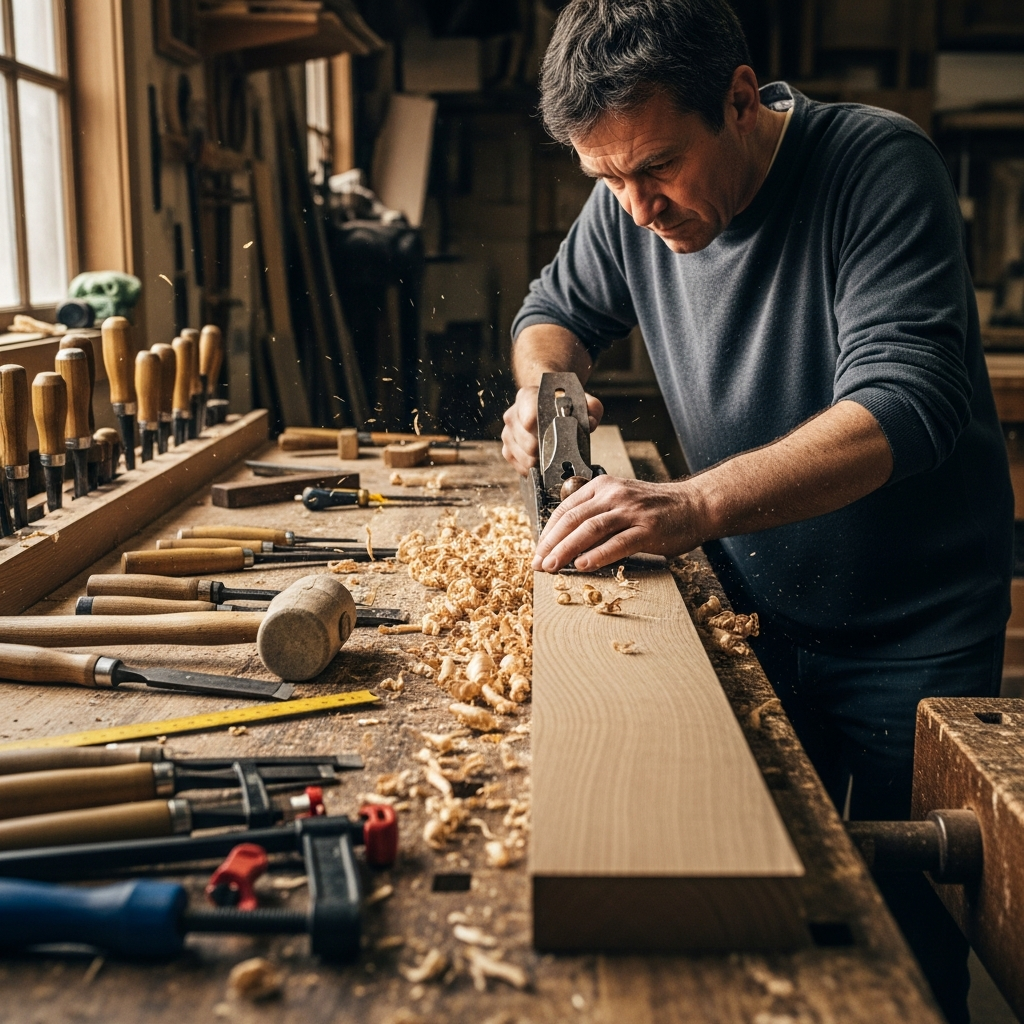
I made a small bookshelf in my shop last year using walnut and hand-cut joinery. Took about a weekend. Looks totally mid century, but it’s mine and I know exactly how it’s built. There’s something satisfying about that.
Living With The Stuff
One thing people don’t mention: mid century open shelving requires you to be neat. There’s nowhere to hide clutter. Every book, every object is visible for everyone to see.
This is either fantastic (if you’re naturally tidy) or a constant source of stress (if you’re not). I’m somewhere in between, honestly. My Royal System looks great when I’ve recently organized it and chaotic when I haven’t had time to deal with the mess.
Dusting is more work too. Open shelves collect dust faster than closed cabinets. I probably dust mine monthly, which is more than I used to dust anything in my entire life.
What I’d Actually Buy
If I had to start over with mid century shelving, here’s my approach:
For small spaces: Wall-mounted systems like Cadovius designs or modern equivalents. Takes no floor space, fully adjustable. This is what I’d recommend to almost anyone starting out.
For room dividers: A freestanding unit with storage on both sides. The Eames-style modular systems work well for this if you can swing the cost.
For budget builds: DIY with good materials. The design language is simple enough to replicate, and you control the quality of every single component.
The one thing I wouldn’t buy is a cheap reproduction pretending to be more than it is. Either get something honestly budget (Target, Ikea) or save up for quality. The middle ground of overpriced knockoffs is the worst of both worlds, and I’ve got the returned Wayfair shelf to prove it.




Stay in the loop
Get the latest wildlife research and conservation news delivered to your inbox.