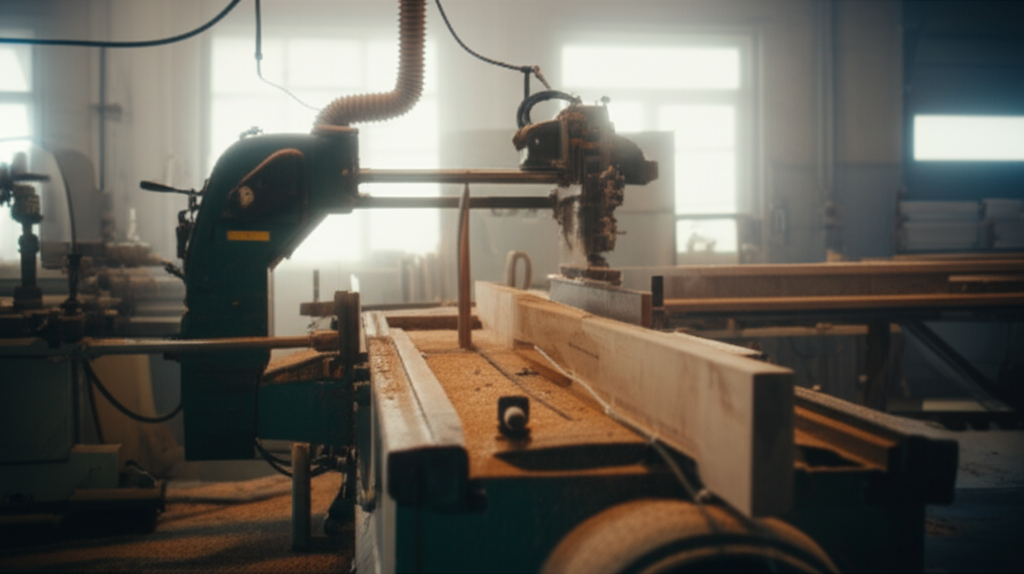
Bought rough lumber last week. Finally got it milled flat today. Lost an inch of thickness.
Worth it. The grain underneath was hiding some nice figure.
Let me back up a bit. I picked up about 200 board feet of 8/4 hard maple from a guy who runs a small sawmill operation outside of town. He has been air-drying this stuff for three years, which is exactly what you want for furniture-grade stock. The price was right – about four dollars a board foot, which is a steal for figured maple these days.
The boards came in rough as a cob, of course. Mill marks, some checking on the ends, and that characteristic fuzzy surface you get from rough-sawn lumber. Nothing a morning at the jointer and planer cannot fix, but here is the thing about rough lumber that newer woodworkers do not always understand: you are going to lose material. A lot of it.
The Math Nobody Talks About
That 8/4 stock – which should be two inches thick – measured out at about 2-1/8 inches in most places. Pretty typical for air-dried lumber. By the time I jointed one face flat, flipped it, and ran it through the planer to get parallel faces, I was down to 1-7/8 inches. Then I had to joint one edge and rip to width on the table saw. Factor in any cup, twist, or bow in the boards, and you are looking at losing even more.
My rule of thumb: expect to lose about 1/4 inch to 3/8 inch per face when milling rough lumber. So that 8/4 stock? It is really 7/4 stock by the time you are done. If you are buying 4/4 rough expecting to end up with 3/4 inch finished boards, you are going to be disappointed. You will be lucky to get 5/8 inch.
But Here Is Why It Is Worth It
About halfway through milling the second board, the jointer blade kissed through the rough surface and revealed something special. Quilted figure. Not just a little bit – we are talking waves of chatoyance running across the entire width of the board. The kind of figure that makes you stop the machine and just stare for a minute.
This is why I buy rough lumber instead of S4S (surfaced four sides) from the big box stores. You never know what is hiding under that fuzzy exterior. This maple was sold to me as plain – the sawyer did not even notice the figure because it does not show until you get a smooth surface on it. Now I have got maybe 50 board feet of exhibition-grade quilted maple that would cost over twenty dollars per board foot if I tried to buy it already surfaced.
A Few Lessons for the Road
If you are new to milling rough lumber, here is what I wish someone had told me:
Let it acclimate. That lumber has been sitting in whatever humidity the sawmill has. Your shop is different. Stack it with stickers (thin strips between each board for air circulation) and let it sit for at least a week before milling. Two weeks is better. I have seen boards move a quarter inch overnight when they hit a new environment.
Mill in stages. Do not go from rough to final dimension in one session. Joint and plane to about 1/8 inch over your final thickness, then let it sit overnight. Wood moves as internal stresses release. Come back the next day and take that final pass.
Keep your blades sharp. Tearout on figured wood is heartbreaking. I resharpen my jointer knives before any session with curly or quilted stock. Some guys swear by taking really light passes – like 1/32 inch at a time. Takes forever, but the results speak for themselves.
That quilted maple is going to become a jewelry box lid for a commission I have got next month. The client has no idea what is coming. Neither did I, until this morning.
That is the magic of working with rough lumber. Every board is a mystery waiting to be revealed.