The history of American furniture making spans four centuries, from the earliest colonial settlements to today’s studio craftspeople. Understanding this rich heritage provides context for contemporary work and inspires new directions in design. This exploration traces the major movements, makers, and influences that shaped furniture production across the nation.
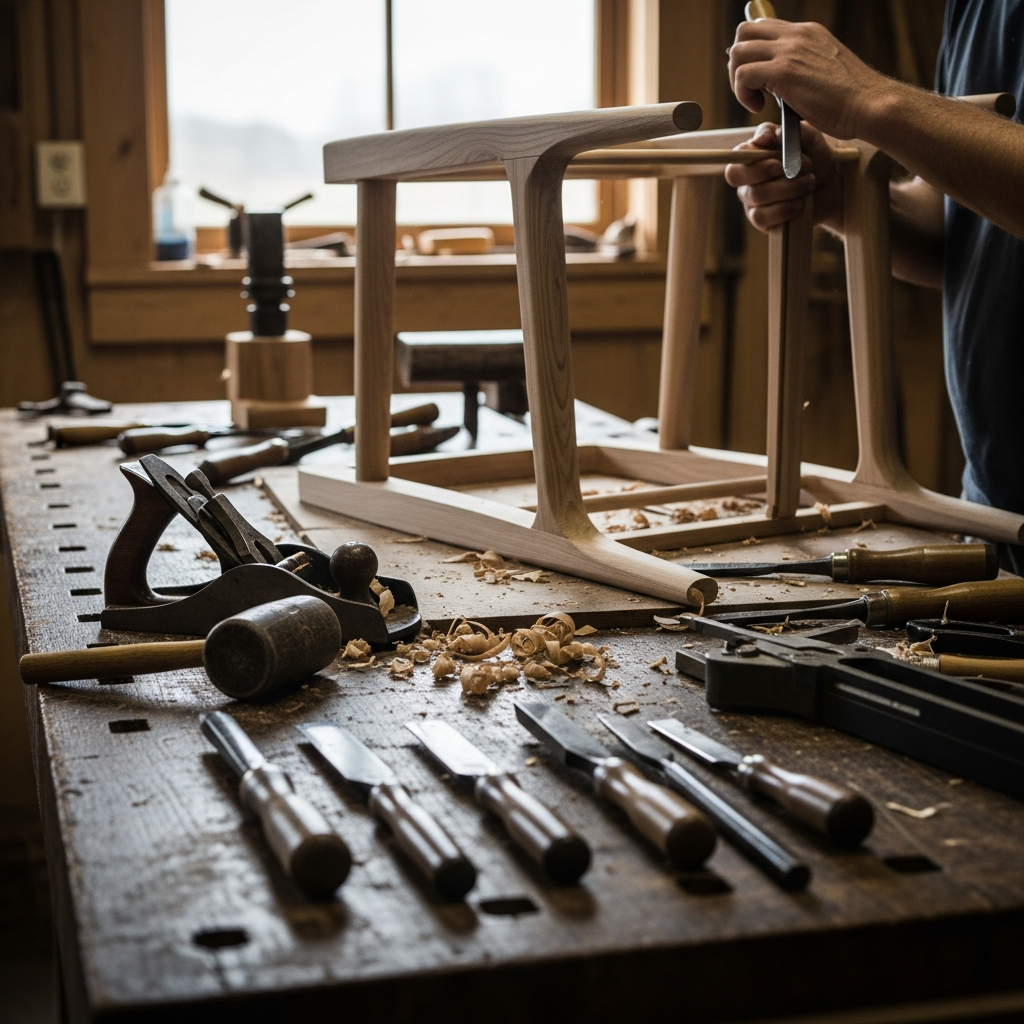
Colonial Beginnings: Practicality Meets Old World Traditions
Colonial Beginnings: Practicality Meets Old World Traditions has gotten complicated with all the conflicting advice flying around. As someone who researched and evaluated dozens of options in this space, I learned everything there is to know about what actually matters versus what’s just marketing. Today, I’ll share the real insights.
The first European settlers in North America brought furniture-making traditions from their homelands but quickly adapted to new circumstances. Limited tools, unfamiliar woods, and the pressing demands of survival shaped a distinctly American approach from the earliest years.
New England joiners, trained in English methods, initially produced furniture reminiscent of Jacobean and William and Mary styles. Heavy oak construction, turned elements, and carved ornamentation characterized these early pieces. However, the abundant pine, maple, and cherry of the new continent gradually replaced traditional English oak, and colonial conditions discouraged the elaborate ornamentation possible in established European workshops.
Regional variations emerged quickly as different colonies developed distinct identities. Boston makers developed sophisticated techniques while maintaining practical restraint. Philadelphia joiners incorporated more elaborate Continental influences. Southern furniture makers, often trained in Britain, produced sophisticated pieces for wealthy plantation owners while simpler vernacular traditions served the broader population.
The Hadley chest, produced in the Connecticut River Valley from roughly 1680 to 1740, exemplifies early American adaptation. These carved and painted pieces combined European panel construction with distinctively American flat-carved decoration. No direct European precedent exists for their particular style, marking them as genuinely American creations.
The Rise of Federal Style
American independence brought not just political change but a deliberate shift in aesthetic sensibilities. The new nation sought to distinguish itself from British colonial influence while embracing the classical ideals that inspired its founding documents.
That’s what makes this endearing to us furniture enthusiasts — understanding these details helps make better decisions.
Federal furniture, dominant from roughly 1785 to 1820, drew inspiration from the neoclassical designs of Robert Adam in Britain and similar Continental sources. Light, elegant forms replaced the heavier colonial aesthetic. Inlay, veneering, and painted decoration substituted for carving. Greek and Roman motifs, eagles, and urns proclaimed American ideals through furniture form.
Samuel McIntire in Salem, Massachusetts, created some of the most accomplished Federal pieces. His carved work, particularly his distinctive wheat sheaf and grape cluster motifs, combined refinement with restraint. McIntire’s furniture for Salem’s wealthy merchants rivaled the best European work of its era.
Duncan Phyfe in New York brought Regency influences to American furniture, adapting British designs for American tastes. His workshop, eventually employing over 100 craftsmen, produced furniture that defined sophisticated American style for a generation. Phyfe’s lyre-back chairs and pedestal tables remain influential today.
Empire and the Machine Age
The Empire style, popular from roughly 1815 to 1840, represented both stylistic evolution and technological revolution. Heavy, bold forms inspired by Napoleonic France replaced Federal delicacy, while new manufacturing technologies began transforming production methods.
Water-powered machinery appeared in larger shops, initially supplementing rather than replacing hand work. Circular saws, lathes, and other powered equipment increased production capacity dramatically. While the finest Empire pieces remained largely handmade, mid-market furniture increasingly relied on machine production for component parts.
Factory furniture production began in earnest during this period. The furniture industry in Grand Rapids, Michigan, launched in the 1830s and would eventually dominate American furniture manufacturing. These early factories combined machine efficiency with hand finishing, producing serviceable furniture at prices that made comfortable furnishing accessible to the growing middle class.
John Henry Belter in New York developed techniques for laminating and steam-bending rosewood into the exuberant Rococo Revival forms popular at mid-century. His patented methods for creating curved surfaces from laminated stock anticipated modern plywood construction by nearly a century.
Probably should have led with this section, honestly.
The Arts and Crafts Response
By the late nineteenth century, reaction against factory production and historical revivals generated a powerful counter-movement. The Arts and Crafts philosophy, imported from Britain but developing distinctly American expressions, championed handcraft, honest materials, and design integrity.
Gustav Stickley became the movement’s most influential American voice. His Craftsman furniture, produced from 1898 onward, emphasized solid construction, visible joinery, and forthright design. Quarter-sawn oak, pinned mortise-and-tenon joints, and hardware handcrafted from hammered copper characterized Stickley’s work.
Stickley’s Craftsman magazine spread Arts and Crafts ideals far beyond furniture, promoting architecture, interior design, and lifestyle philosophies aligned with the movement’s values. Bungalow plans, garden designs, and household management advice reached audiences who might never purchase Craftsman furniture but absorbed its principles.
Regional Arts and Crafts communities developed distinct approaches. The Roycroft community in East Aurora, New York, produced furniture alongside metalwork, leather goods, and publications. The Rose Valley community near Philadelphia emphasized collaborative craft production. The furniture workshops at various arts colonies contributed distinctive interpretations of Arts and Crafts principles.
Greene and Greene in Pasadena created perhaps the most sophisticated American Arts and Crafts furniture. Their built-in and freestanding pieces for the Gamble House and other commissions display extraordinary refinement while maintaining Arts and Crafts honesty. Ebony pegs, rounded edges, and carefully composed proportions distinguish their work.
Modernism’s American Chapter
European modernism reached American shores in the 1930s as political upheaval drove designers across the Atlantic. These emigres, combined with American innovators, created mid-century modern furniture that remains influential today.
Charles and Ray Eames revolutionized furniture design and production through their experiments with molded plywood and fiberglass. Their lounge chair and ottoman, introduced in 1956, demonstrated that modern materials and production methods could create furniture with warmth, comfort, and visual sophistication equal to traditional handcraft.
George Nakashima bridged modernism and craft tradition through his studio practice in New Hope, Pennsylvania. His signature pieces incorporated live edges, butterfly joints, and minimal intervention in naturally beautiful timber. Nakashima’s approach influenced generations of studio furniture makers seeking to combine modern simplicity with respect for materials.
Wharton Esherick, working from his Pennsylvania studio from the 1920s onward, developed a sculptural approach to furniture that defied easy categorization. His organic forms, often carved from single timber blocks, anticipated studio furniture developments of later decades while remaining deeply rooted in craft tradition.
The Studio Furniture Movement
Beginning in the 1970s, a new generation of maker-designers emerged, creating one-of-a-kind pieces that challenged boundaries between furniture, sculpture, and fine art. This studio furniture movement, still vital today, represents perhaps the most significant development in American furniture since the Arts and Crafts period.
Wendell Castle pioneered stack-laminated construction, creating organic sculptural forms impossible through traditional methods. His early work pushed furniture toward pure sculpture, while later pieces found balance between artistic expression and functional purpose.
Sam Maloof, working in California, developed a signature style combining exceptional comfort with visual grace. His rocking chairs, shaped through hours of patient handwork, earned recognition from collectors and museums worldwide. Maloof’s generous teaching and writing influenced countless emerging makers.
Judy Kensley McKie brought narrative and animal imagery to furniture through carved and painted surfaces. Her work connected contemporary practice to folk traditions while remaining thoroughly modern in conception and execution.
James Krenov, through his teaching at the College of the Redwoods and his influential books, advocated for deeply personal, intuitive approaches to furniture making. His philosophy emphasized sensitivity to materials and rejection of formulaic methods, inspiring generations of thoughtful craftspeople.
Regional Traditions and Vernacular Furniture
Alongside high-style developments, vernacular furniture traditions flourished throughout American history. These practical pieces, made by local craftspeople for everyday use, reveal as much about American life as their more celebrated counterparts.
Shaker furniture, produced from the late eighteenth century through the early twentieth, combined religious conviction with remarkable design clarity. Shaker makers believed that beauty emerged from utility and that ornament for its own sake constituted prideful distraction. Their ladderback chairs, built-in cabinetry, and storage solutions influence designers to this day.
Appalachian chairmakers developed distinctive turned and woven-seat chairs suited to local materials and conditions. These traditions, rooted in British and German folk craft, evolved through generations of mountain makers into forms found nowhere else.
Southwestern furniture traditions, blending Spanish colonial, Native American, and Anglo influences, created distinctive regional expressions. Painted surfaces, carved details, and construction methods adapted to limited timber resources characterize this category.
Contemporary Directions
Today’s American furniture making encompasses extraordinary diversity. Production manufacturers, studio craftspeople, designer-makers, and hobbyist woodworkers all contribute to a vibrant scene with room for multiple approaches and aesthetics.
Sustainability concerns increasingly influence material choices and production methods. Salvaged and urban-harvested timber, certified sustainable sources, and responsible finishing practices respond to environmental awareness among makers and consumers alike.
Technology and tradition coexist in productive tension. CNC routers and laser cutters join hand planes and chisels in contemporary workshops. Some makers embrace digital tools wholeheartedly; others reject them entirely; most find practical accommodations between extremes.
The internet transformed how furniture makers connect with audiences and each other. Social media allows makers anywhere to share their work globally, while online marketplaces provide sales channels independent of traditional gallery representation. Online communities support learning and exchange that geographic isolation once precluded.
Learning from the Past, Building for the Future
American furniture’s rich history offers contemporary makers an invaluable resource. Studying historical work develops design vocabulary, reveals tested solutions to common problems, and connects present practice to centuries of accumulated wisdom.
Museums with significant furniture collections deserve repeated visits. The Metropolitan Museum of Art, Winterthur, the Museum of Fine Arts Boston, and numerous regional institutions hold pieces repaying close study. Examine construction details, consider proportional relationships, and observe how different periods and regions approached similar functional challenges.
Period reproductions and adaptations remain viable creative paths for contemporary makers. Understanding historical context and construction methods enables work that honors tradition while serving present needs. Many successful furniture businesses specialize in historically informed pieces that resonate with clients seeking connection to craft heritage.
Original work benefits equally from historical awareness. Understanding what came before helps identify genuinely new directions and prevents inadvertent reinvention of established solutions. The most innovative contemporary makers typically possess deep historical knowledge that informs their departures from convention.
American furniture making continues evolving, shaped by new makers bringing fresh perspectives, changing technologies, and evolving aesthetic sensibilities. This ongoing development connects to four centuries of precedent while remaining open to futures we cannot yet imagine. Every piece created today adds another thread to a tapestry still being woven.