Moved to Des Moines about eight years ago, and finding good woodworking supplies was one of my first priorities. Coming from a bigger city, I wasnt sure what to expect. Turns out, theres actually a pretty solid selection here if you know where to look.
Ive spent way too much money at these places over the years, so figured I might as well share what Ive learned.
The Hand Tool Basics
Every shop needs the fundamentals. When I set up my new garage workshop, here was my starting list:
Saws first. I picked up a decent backsaw and a coping saw – those two handle maybe 80% of the hand cutting I do. Yeah, I have fancier stuff now, but those were my workhorses for the first couple years.
Chisels are where I tell people not to cheap out. I bought a set of bargain bin chisels when I started. Within six months I replaced them with Narex chisels from Woodsmith Store over on Hickman Road. Night and day difference. They hold an edge so much better.
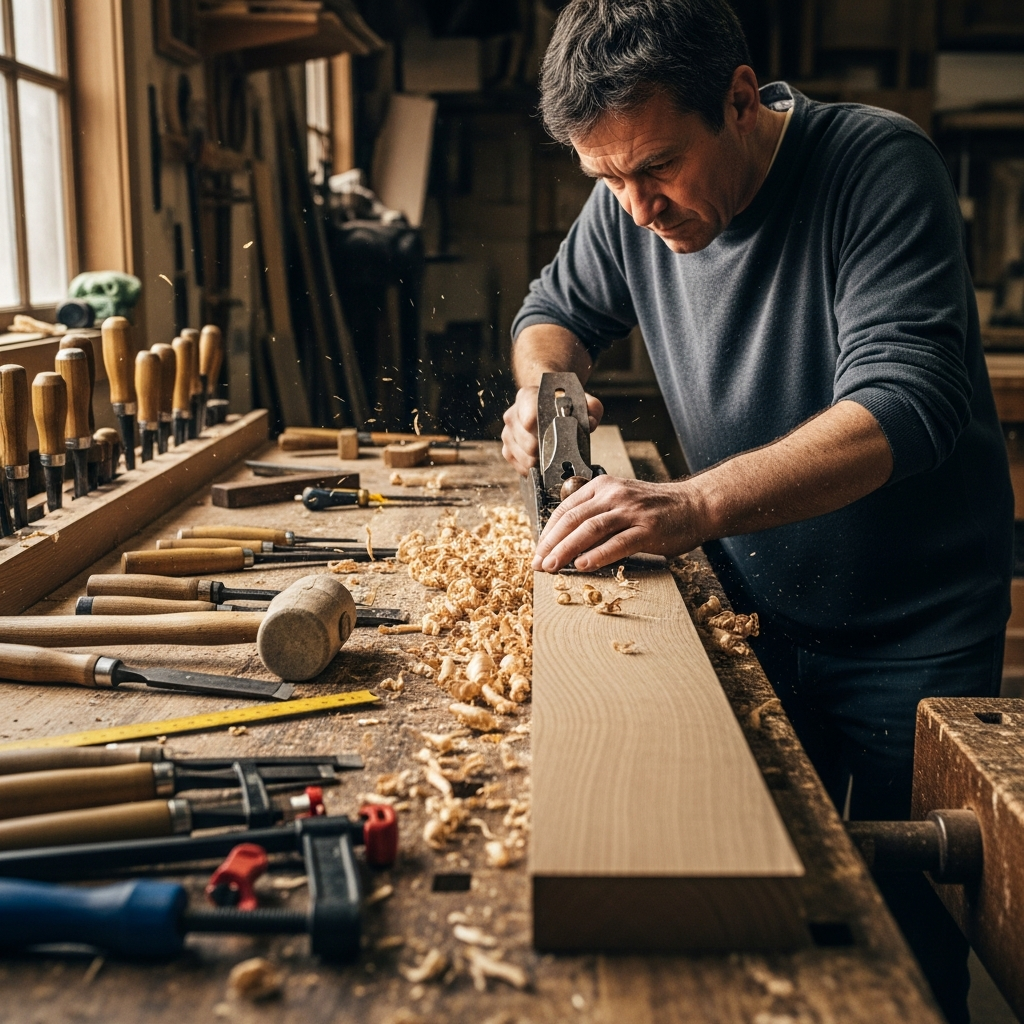
A block plane and a #4 smoothing plane cover most of what youll need for flattening and smoothing. I found a nice old Stanley #4 at an estate sale in Ankeny – paid maybe fifteen bucks for it, spent an afternoon tuning it up, and its become one of my favorite tools.
Power Tool Shopping Around Here
Acme Tools in Ankeny has become my go-to for bigger purchases. Their staff actually knows woodworking, which sounds like a low bar but youve probably been to stores where the employees cant tell a router from a sander.
I picked up my table saw there – a DeWalt contractors saw that fits my one-car garage shop. The sales guy talked me out of a more expensive cabinet saw that honestly wouldve been overkill for my needs. I respect that.
For routers, I went cordless last year with a Milwaukee M18. Probably didnt need to, but man is it nice not dealing with a cord when Im doing edge work. Got that at Home Depot in West Des Moines during a sale.
My miter saw is nothing fancy – a Ryobi 10-inch sliding compound that handles everything Ive thrown at it. Picked that up used from a guy on Facebook Marketplace. Thats actually a good tip: check the local listings. Lots of people around here buy tools for one project and then sell them.
Measuring Stuff (More Important Than You Think)
Had a woodworking teacher years ago who used to say “measure twice, cut once.” Pretty sure every woodworker has heard that. What he also said, which stuck with me more: “a bad measurement costs you money every single time.”
I probably have six tape measures scattered around my shop. The one I actually trust is a Stanley FatMax that lives on my bench. Those cheap tape measures stretch over time – I learned this the hard way when I kept cutting boards 1/16″ short.
A good combination square is maybe my most used measuring tool. I have a Starrett that cost way too much, but I also have a cheap one from Harbor Freight that works fine for rough work. You dont need the expensive one starting out.
Rockler in Urbandale has a solid selection of measuring and marking tools. Thats where I got my marking gauge and a nice pair of dividers. Also some specialty stuff like center finders that I use more than I expected.
Keeping Tools Sharp
Dull tools are dangerous tools. They slip, they tear instead of cut, and they make you push harder than you should.
I sharpen my own stuff now – got a set of water stones from Amazon that work great. But before I learned, I used the sharpening service at Woodsmith Store. They know what theyre doing and the turnaround is usually same day.
For power tool maintenance, I keep spare blades on hand. Nothing worse than being in the middle of a project and realizing your table saw blade is toast. I order carbide-tipped blades in bulk from online suppliers – usually way cheaper than buying one at a time locally.
Finding Good Wood
This is where Des Moines surprised me. Theres actually really good lumber available if you look.
Liberty Hardwoods has been my main source. Their walnut selection is excellent, and they stock some exotics if youre into that. The folks there are helpful about picking boards – theyll walk through the pile with you to find what you need.
For construction lumber – dimensional pine and that sort of thing – I usually just hit Menards. Nothing special, but you can pick through the stacks for straighter boards if youre patient.
Iowa Lumber is good for bigger orders or unusual sizes. Theyve milled custom dimensions for me a few times when I needed something specific.
One thing Ive started doing: when I see someone taking down a tree, I ask if I can have some of the wood. Ive gotten some beautiful ash and oak that way. Just gotta let it dry properly, which means planning a year or two ahead.
Safety Gear You Actually Need
Im going to sound like a safety pamphlet here, but I dont care. I wear glasses in the shop every single time, no exceptions. Got a sawdust chip in my eye once – minor injury, major wake-up call.
Hearing protection matters more than people think, especially if youre running power tools regularly. I use those cheap foam earplugs from Menards, buy them in bulk. Work fine, cost basically nothing.
Dust collection or at least a good mask for sanding. The fine stuff from sanding can really mess up your lungs over time. I rigged up a cheap dust collector from Harbor Freight that handles my table saw and planer. Not perfect but way better than nothing.
Connecting With Other Woodworkers
The Des Moines Woodworkers Association meets monthly and its been great for learning. Ive picked up techniques there that wouldve taken me years to figure out on my own. Plus, members share tools sometimes, which saved me from buying a biscuit joiner I wouldve used exactly twice.
Woodsmith Store does classes too. I took their hand-cut dovetails class last fall and it was worth every penny. Sometimes you need someone watching over your shoulder to point out what youre doing wrong.
A Few Places Worth Mentioning
Besides the spots Ive already talked about:
ODonnell Ace Hardware – smaller store but they carry some interesting stuff. Found some unusual wood plugs there once that I couldnt find anywhere else.
The Makers space downtown – not a store, but they have CNC machines and laser cutters if you want to try those technologies without buying equipment.
Estate sales and auctions – seriously, keep your eyes open. Old tools are often better made than new ones, and the prices can be incredible. Ive built maybe a third of my hand tool collection from estate sales.
Starting Out?
If youre just getting into this hobby, my advice is dont buy everything at once. Start with a few quality hand tools, maybe one or two power tools, and build from there as you need stuff. Youll figure out what you actually use versus what you thought youd use.
And talk to people. Every woodworker Ive met in this city has been happy to share advice. We all made dumb mistakes when we started. Helping someone else skip those mistakes is kind of the point.


Stay in the loop
Get the latest wildlife research and conservation news delivered to your inbox.