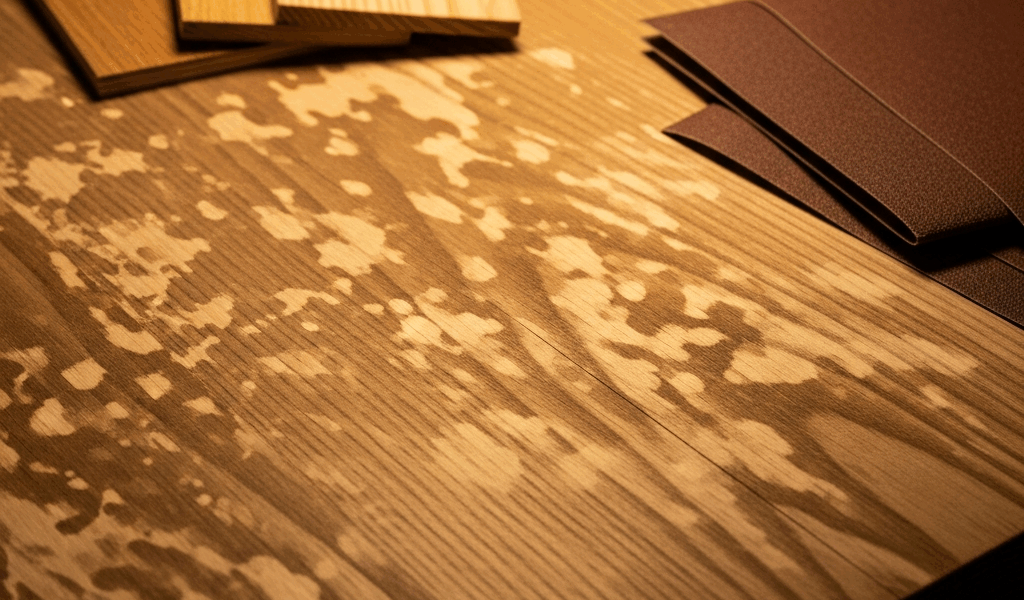
What Blotchy Finish Actually Means
Woodworking finishes have gotten complicated with all the conflicting advice flying around. You stare at your finished board and something’s clearly off — darker patches here, lighter ones there, like the wood had a completely different plan than you did. That’s blotching. And honestly, it catches even experienced folks off guard.
But what is blotching, exactly? In essence, it’s uneven finish absorption caused by inconsistent wood structure. But it’s much more than that. Wood isn’t one thing — it’s soft earlywood and dense latewood living side by side, and they drink stain at wildly different rates. Some species are notorious for this. Pine. Cherry. Alder. Poplar. If you just finished one of these and you’re reading this right now, I understand the panic.
Diagnosing the Cause Before You Do Anything
Don’t grab sandpaper yet. Before you sand anything back or exile the piece to your garage indefinitely, figure out what actually happened. There are four real culprits here — run through them mentally before touching a thing.
Wood Species Itself
Pine, cherry, alder, poplar, birch — these are the usual suspects. Their cell structure is uneven by nature. You cannot sand that fact away or wish it out of existence. What you can do is work around it with the right prep, which we’ll get to shortly. That’s what makes understanding your species so essential for anyone serious about clean results.
Sanding Shortcuts
Skipped a grit? Rushed from 80-grit straight to 150-grit? Those scratches telegraph right through your finish. I learned this on a cherry dresser — thought I was being efficient. Spent four hours stripping it back instead. Don’t make my mistake. Incomplete sanding creates uneven surface density, and uneven density means the open areas absorb everything while the burnished spots reject it entirely.
Wrong Product for the Wood
Water-based stains might be the worst option here, as soft wood finishing requires a product that sits on the surface rather than racing into the grain. That’s because water raises the grain and accelerates uneven absorption almost immediately. Oil-based and gel stains are considerably more forgiving. Thick topcoats hide more variation than thin ones — worth keeping in mind.
Surface Contamination or Mill Glaze
Mill glaze — that compressed, waxy surface left by the planer — prevents finish from absorbing evenly across the board. Literally. Dust, old oils, residue from a previous project — same result. Wood that came straight from the lumberyard without sanding almost certainly has glaze present. It’s invisible and it will ruin your finish. Sand it off.
How to Fix Blotching on a Piece You Already Finished
Your finish is on. It looks terrible. So, without further ado, let’s dive in.
If the Finish Is Still Wet or Tacky
You caught it early — good. Depending on conditions and product, you’ve got maybe a 30-minute window. Grab lint-free cotton rags — old t-shirt material is genuinely perfect here — and wipe the entire surface using moderate, even pressure. Long strokes. Follow the grain. Don’t scrub.
You’re pulling excess finish out of the pooled areas while preserving an even base coat underneath. Won’t cure severe blotching, but it tones down the obvious variation fast. Let the piece dry per the product label after wiping — usually somewhere between four and eight hours for oil-based stain. Then examine it. Minimal blotching? Apply a second coat. Still bad? You’ve at least bought time before committing to a full strip.
If the Finish Is Fully Cured
Probably should have opened with this section, honestly — because this is where most people end up. Badly blotched finish that’s fully cured needs to come off. Two realistic options: sand back to bare wood, or strip the whole piece.
Sanding back works when blotching is limited to the stain layer and the topcoat is untouched. Start with 120-grit on a random orbital sander — a Dewalt 5-inch ROS is what I use — and sand evenly until you break through the stain and hit bare wood again. Plan on 45 minutes to an hour on something like a cabinet door. Then 150-grit. Then 180-grit. Final pass by hand with 220-grit, following the grain. You’re not chasing perfection. You’re chasing consistency — uniform color and texture across the entire surface.
Full stripping makes sense when blotching hit multiple coats or topcoat damage is severe. Chemical strippers, a heat gun, or coarse orbital work will get you there. It’s messy. It takes time. But sometimes starting fresh is the only honest answer.
How to Prevent Blotchy Finish Before You Apply It
Prevention beats fixes. Every single time.
Start with the Right Sanding Sequence
Sand in stages: 80-grit, 120-grit, 150-grit, 180-grit. Every step. No skipping. Each grit exists to remove scratches from the one before it — skip a stage and those scratches survive under your finish forever. Final surface should feel uniformly smooth. Close your eyes and run your hand across it. Feel any transitions at all? Start over.
Use a Pre-Conditioner on Soft or Porous Woods
Pre-conditioner is diluted finish — it partially seals the surface and equalizes absorption across uneven grain. Apply it about 15 minutes before staining. Minwax Pre-Stain Wood Conditioner runs around $6–7 per quart and works reliably on pine, poplar, and alder. Let it dry fully, then hit it lightly with 220-grit to degloss before you stain. That’s the step people skip. Don’t.
The Washcoat Technique
A washcoat is an ultra-thin finish layer applied before stain — think of it as sealing the surface just enough to slow absorption without blocking it entirely. Dewaxed shellac is the best option here, as washcoating requires something fast-drying that won’t interfere with oil-based or water-based stains afterward. That’s because shellac bonds with virtually everything once cured. Mix it to half-strength using denatured alcohol, apply with a brush or foam pad, and aim for an almost translucent coat. It’ll look strange going on. Embrace that. Dry time is around 30 minutes, then sand with 220-grit before staining.
I’m apparently more cautious than most woodworkers, and this technique works for me on cherry while skipping it never ends well. It costs almost nothing and prevents the vast majority of blotching problems on difficult species.
The Wet Rag Test
Before committing to stain on any new wood species, do this first — at least if you want to avoid surprises. Dampen a cotton rag with mineral spirits and wipe a hidden section of the board. This simulates stain absorption and shows you exactly what you’re dealing with. Uneven color means you need a pre-conditioner or washcoat before proceeding. Uniform color means you’re probably fine. Takes two minutes. Saves hours.
Gel Stain as Insurance
Gel stain might be the best option overall, as problem-wood finishing requires something that sits on the surface rather than diving into the grain. That’s because gel stain’s thicker consistency simply doesn’t penetrate the way liquid stain does — which is the whole point. It blotches far less and forgives application errors that liquid stain would punish. Costs more — usually $12–18 per quart versus $6–10 for liquid — but on pine or cherry, that price difference is completely irrelevant. Minwax Gel Stain and Varathane Premium Gel Stain are both reliable. Apply thin coats, let each cure fully, build color gradually.
Wipe with Mineral Spirits Before Final Finish
After sanding, cleaning, and staining, wipe the piece down with a rag that’s damp — not soaked — with mineral spirits. This lifts dust and gives you a preview of exactly how the finished piece will look under topcoat. Blotching visible at this stage? That’s stain blotching, not a topcoat issue. You’ve caught it before it’s sealed in permanently. Now you can actually do something about it.
Product and Species Quick Reference
Bookmark this. Print it out. Tape it inside your shop cabinet door.
- Pine — Oil-based pre-conditioner or gel stain. Avoid water-based stain entirely. Washcoat optional but recommended.
- Cherry — Dewaxed shellac washcoat is essentially mandatory. Or go straight to gel stain. Pre-conditioner alone won’t cut it here.
- Alder — Pre-conditioner plus a light washcoat. Or skip both and use gel stain exclusively — that works too.
- Poplar — Pre-conditioner required. Washcoat strongly recommended on top of that. Water-based stain will cause severe blotching every time.
- Maple — Light washcoat or gel stain. Don’t over-sand — burnished spots reject stain completely. Stop at 220-grit and stay there.
- Birch — Pre-conditioner works well. Washcoat adds insurance. Dense enough that a standard approach usually succeeds with proper prep.
- Oak — Large pores but consistent structure. Pre-conditioner optional. Standard sanding and staining generally fine without extra steps.
Blotchy finish stings — you put real hours into a piece and it comes out looking like a beginner job. But it’s fixable, and far more importantly, it’s preventable. Diagnosis has to come first, though. Skip that step and you’ll repeat the exact same mistake on your next project. Nail the prevention side of this, and you’ll honestly wonder why you ever stressed about blotching at all.




Stay in the loop
Get the latest artisan furniture makers updates delivered to your inbox.