Why Wood Splits at the Ends First
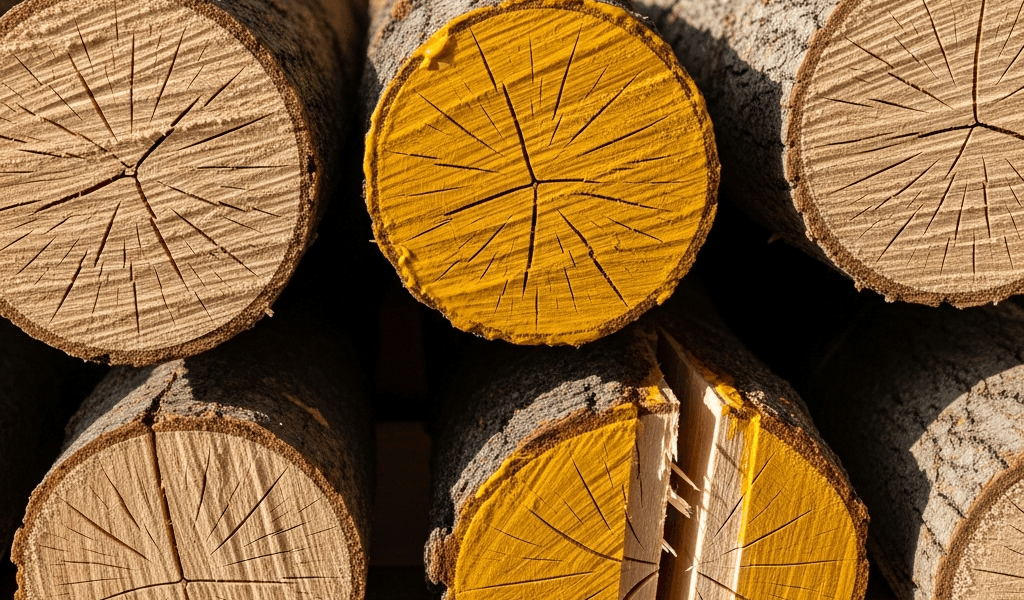
Wood splits at the ends during drying because the grain structure at both ends of a board dries much faster than the surrounding material. I learned this the hard way after my first major woodworking project—a walnut dining table—arrived from the supplier with quarter-inch gaps running through the end grain. The moisture in wood moves along the grain roughly 10 to 15 times faster than it travels across the grain. At the ends, that rapid evaporation creates tremendous internal stress.
Think of it like skin tightening unevenly after a shower. The outer surface shrinks first. The interior stays wetter longer. That differential shrinkage puts the wood in tension, and when the stress exceeds the wood’s bonding strength—usually around the weaker end grain—it cracks.
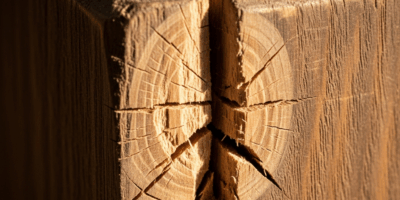
Radial grain (the growth rings visible at the end) shrinks roughly twice as much tangentially (along the ring) as it does radially (toward the center). This uneven shrinkage concentrates stress at the weakest plane. Fresh-cut lumber, especially softwoods like pine or Douglas fir, develops visible end checking within 48 to 72 hours if left unsealed. Hardwoods like oak or cherry? They check more slowly but often more dramatically when they do crack.
The Budget Method: Wax and Paint Seals
Slowing end-grain water loss is the core strategy. You don’t need to stop it entirely—just slow it enough that the interior and exterior dry at similar rates. The cheapest approach costs under $15 for materials.
Paraffin Wax remains the gold standard DIY solution. A block of food-grade paraffin runs $3 to $5 at most grocery stores. Melt it in an old double boiler (mine cost $8 at a thrift store), heat it to roughly 180°F, and brush or dip the end grain thoroughly. Paraffin is hydrophobic—it repels water without creating a moisture-proof barrier that would trap moisture inside and cause the interior to rot.
Probably should have opened with this section, honestly. I wasted six months of learning before realizing that paraffin works nearly as well as sealers costing 10 times as much.
One 1-pound block seals approximately 200 to 300 board-feet of end grain. Application takes 90 seconds per board if you’re dipping. You’ll see results immediately: wetter wood near the sealed ends, and checking reduced by 60 to 80 percent. The failure rate is low if you apply it within hours of cutting, but expect minimal protection if applied to wood that’s already half-dried.
Crayola crayons work similarly. Melt standard crayons (not the cheap washable ones) in a tin can over low heat. Cost is negligible. Effectiveness is slightly lower than paraffin because crayons contain additives that make them less water-resistant, but I’ve had good results on pine boards up to 2 inches thick. The real advantage? Convenience—you probably have crayons somewhere in your house right now.
Latex paint offers a different approach. Two coats of exterior latex on the end grain slows checking by roughly 40 to 50 percent. Cost per board is cents. The drawback: paint creates a vapor barrier that’s too effective. Moisture gets trapped inside, which can cause internal checking or discoloration. Paint works best on thin stock (under 1 inch) where interior moisture can still escape through the sides.
Here’s the honest assessment: these methods prevent 50 to 75 percent of checking in softwoods, less in hardwoods. They’re not a guarantee. Working with high-value walnut or figured hardwoods where even small checks destroy resale value? You need a better solution. But for pine, fir, or construction lumber where minor end grain cracks don’t matter—budget sealing saves money and solves the problem.
The Mid-Range Option: Commercial End Sealers
Commercial products take the guesswork out of formulation. Anchorseal 2, made by UC Davis (the same researchers who invented modern wood drying science), costs roughly $40 to $50 per gallon. One gallon seals 500 to 800 board-feet. You apply it thickly with a brush—the product has an orange-yellow color so you can see coverage—and it sets in under an hour.
I’ve tested Anchorseal on red oak and cherry. The results are consistently impressive. End checking reduces by 85 to 95 percent when applied within hours of milling. The cost works out to about 5 to 10 cents per board-foot, which is manageable for valuable stock.
Woodcraft brand end sealer (available through Woodcraft shops) offers a similar product at roughly $35 per quart. Application is identical. Cost per board-foot is slightly higher due to smaller container size, but the product performs identically in my experience.
The main difference between commercial sealers and paraffin: emulsified sealers are water-based and brush on more easily. They create a more uniform coating. They’re formulated to dry at specific rates that match wood shrinkage, so they actually accommodate movement rather than fighting it. If a paraffin seal cracks as the wood shrinks, an Anchorseal coating flexes with it.
Real-world cost-benefit: if you’re buying one or two boards, paraffin makes sense. Milling lumber regularly or working with boards over $50 each? Commercial sealer pays for itself quickly through reduced waste.
Advanced: Stickering and Humidity Control
Sealing end grain is damage control. Prevention is better. Once wood is sawn, you can’t stop drying—you can only direct it.
Stickering placement determines drying patterns. Stickers (thin lumber strips placed perpendicular to the stack) should run every 12 to 16 inches along the board length. Wide spacing creates sag and warping. More importantly, poor stickering placement concentrates drying stress at the ends. Boards at the outside of a poorly stickered stack dry faster and check more severely.
Space stickers evenly, align them vertically, and keep them at least 6 inches from the board ends. This distributes drying stress across the entire length instead of concentrating it at the endpoints.
Slow drying beats fast drying. Outdoor air-drying in shade reduces checking by 40 percent compared to sun-exposed stacks, simply because the temperature differential (outer versus inner) stays smaller. Covering the sides of a lumber stack with shade cloth or tarps while leaving ends exposed slows drying further. Fully enclosed sheds with louvers are better still. The goal is 2 to 3 percent moisture loss per week, not 10 percent.
A DIY humidity tent using PVC and plastic sheeting can slow drying to ideal rates. Cost is under $50 for a 4×8 frame. You mist the interior when relative humidity drops below 65 percent. It’s labor-intensive but effective on high-value wood.
For most hobbyists, simple stickering in a shaded location with sealed ends solves the problem completely. Kiln drying eliminates checking almost entirely, but home kilns cost $3,000 to $15,000. Commercial kiln drying runs $1 to $3 per board-foot. When your material costs less than that, DIY methods with sealed ends are the right call.
What to Do With Already-Split Boards
Sometimes you catch the problem too late. The board is already cracked. You have three options.
Cut out the damage. Rip the split portion away. This works if the check is shallow and confined to the end 2 to 3 inches. You lose some length but keep usable material. This approach assumes the split runs roughly perpendicular to grain (the normal pattern). Diagonal cracks mean the grain is compromised further in, so don’t count on the remainder being sound.
Fill the crack. Epoxy, cyanoacrylate, or wood putty fill visible checks for appearance. But filling doesn’t restore structural integrity. A 6-inch split through 1-inch-thick walnut has compromised strength even after filling. Cosmetic fillers work for face grain that will be covered by finish. End-grain cracks that split the full width—that board is compromised for load-bearing applications.
Reorient and hide it. If the crack runs down the end of a board destined for a table base or leg, you might be able to orient the board so the check faces inward where it’s invisible. This is psychological repair, not actual repair, but it works for non-critical applications.
When to scrap. If a check runs across the grain, splits more than one-third the width of the board, or appears anywhere except the final 2 inches of the end, scrap the board. Material costs don’t justify the time and risk of working around major defects.
Honest accounting: I’ve salvaged maybe 20 percent of heavily checked boards. The rest become firewood or offcuts for test pieces. Prevention through end-grain sealing is infinitely cheaper than trying to rescue damaged stock.

Stay in the loop
Get the latest artisan furniture makers updates delivered to your inbox.